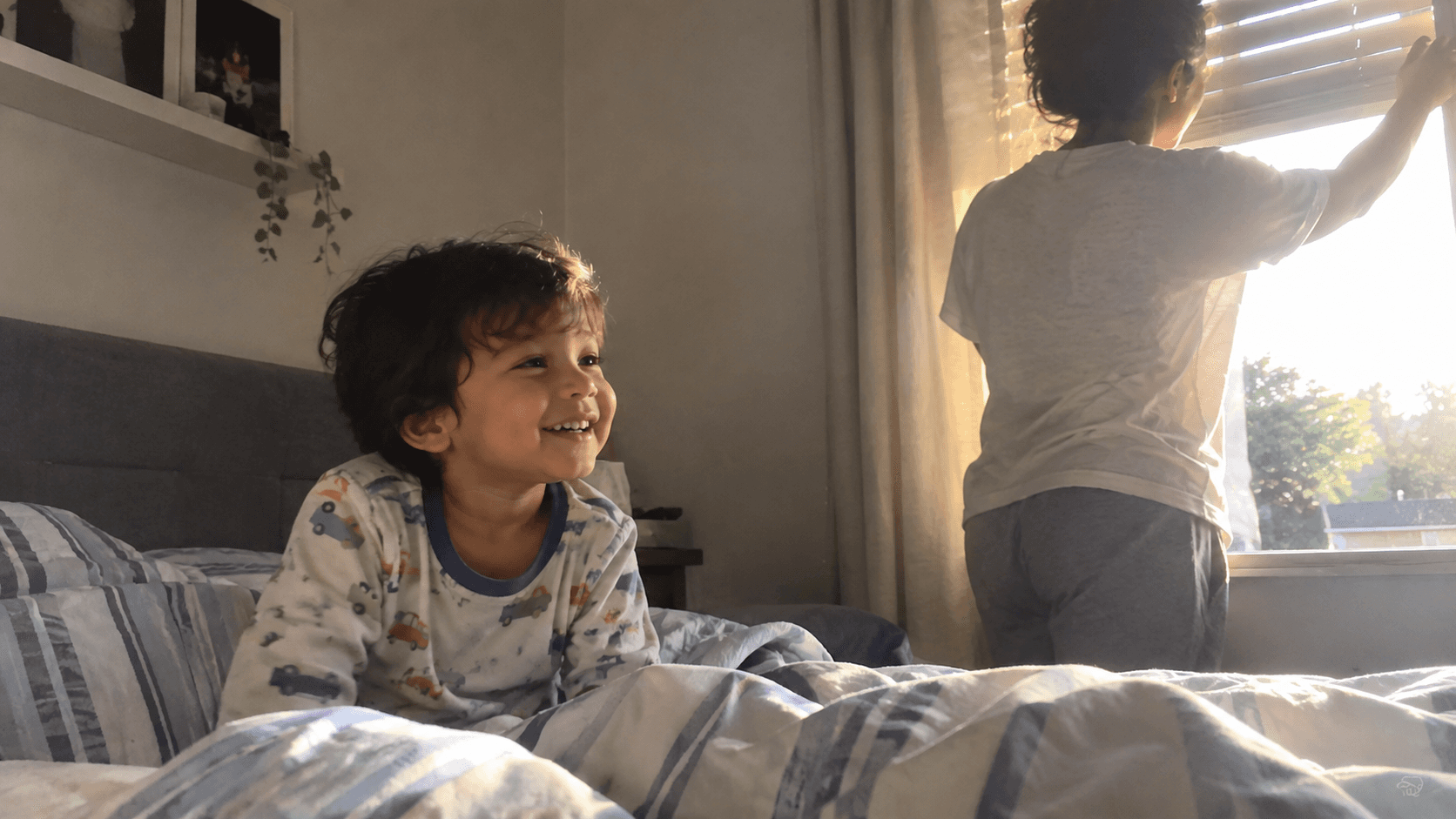
Touch supervision, every time
The AAP recommends staying within arm's reach of young children in or near any water, including bathtubs and small pools. Assign one adult as the dedicated 'water watcher' with no phones or distractions.


Early Learning
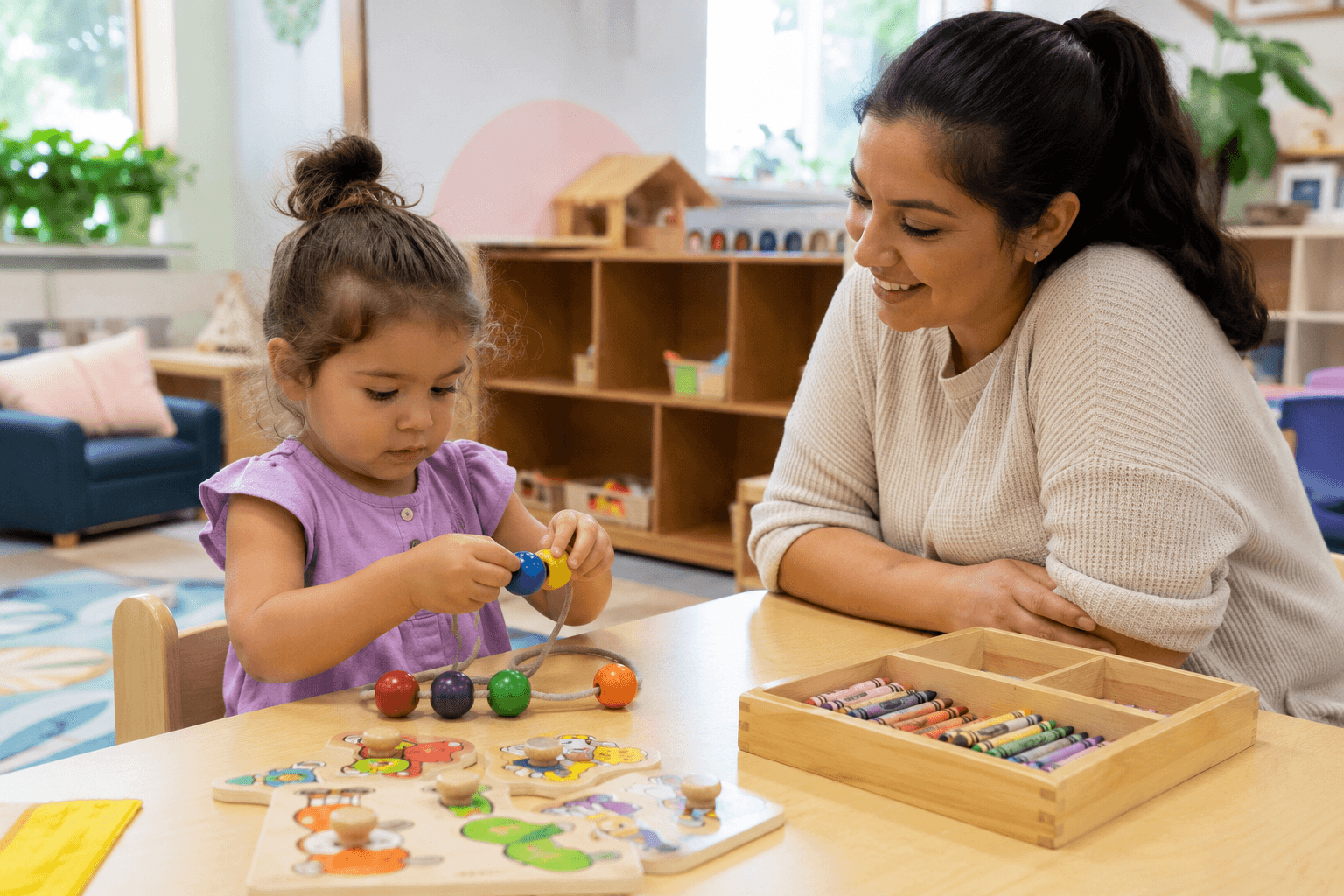
Fine motor skills are the small hand and finger movements children use for everyday tasks like eating, getting dressed, drawing, turning pages, and beginning to write. NAEYC explains that many daily activities depend on these small muscles and that children become more independent when they have opportunities to practice them.
These skills matter for school readiness because early classrooms ask children to manage tools and materials with growing control. Children may need to hold crayons, use scissors, manipulate puzzle pieces, open containers, or serve themselves during routines. The CDC lists examples of age-related physical milestones such as using a fork, stringing items together, unbuttoning some buttons, serving food or pouring water with supervision, and holding a crayon or pencil between fingers and thumb.
Fine motor skills are the small hand and finger movements children use for everyday tasks like eating, getting dressed, drawing, turning pages, and beginning to write. NAEYC explains that many daily activities depend on these small muscles and that children become more independent when they have opportunities to practice them.
These skills matter for school readiness because early classrooms ask children to manage tools and materials with growing control. Children may need to hold crayons, use scissors, manipulate puzzle pieces, open containers, or serve themselves during routines. The CDC lists examples of age-related physical milestones such as using a fork, stringing items together, unbuttoning some buttons, serving food or pouring water with supervision, and holding a crayon or pencil between fingers and thumb.
Fine motor development does not happen through worksheets alone. It grows through play, repetition, and hands-on experiences that build strength, coordination, and confidence. Florida’s Birth to Kindergarten standards also describe development as a progression of age-related knowledge and skills, which supports a practical, developmental approach instead of unrealistic one-size-fits-all expectations.
The good news for parents is that fine motor practice can happen naturally throughout the day. NAEYC recommends simple activities such as stirring, pouring, buttoning, zipping, opening lids, finger painting, using playdough, drawing, placing pegs, building with small blocks, and playing with puppets or puzzles.
At daycare, children often practice these skills during art, sensory play, meals, self-help routines, and teacher-guided learning centers. At home, parents can support the same growth with low-pressure activities that feel playful rather than academic. The CDC also encourages hands-on play, drawing, simple chores, and practical routines as part of healthy development.
Fine motor development does not happen through worksheets alone. It grows through play, repetition, and hands-on experiences that build strength, coordination, and confidence. Florida’s Birth to Kindergarten standards also describe development as a progression of age-related knowledge and skills, which supports a practical, developmental approach instead of unrealistic one-size-fits-all expectations.
The good news for parents is that fine motor practice can happen naturally throughout the day. NAEYC recommends simple activities such as stirring, pouring, buttoning, zipping, opening lids, finger painting, using playdough, drawing, placing pegs, building with small blocks, and playing with puppets or puzzles.
At daycare, children often practice these skills during art, sensory play, meals, self-help routines, and teacher-guided learning centers. At home, parents can support the same growth with low-pressure activities that feel playful rather than academic. The CDC also encourages hands-on play, drawing, simple chores, and practical routines as part of healthy development.
Fine motor development does not happen through worksheets alone. It grows through play, repetition, and hands-on experiences that build strength, coordination, and confidence. Florida’s Birth to Kindergarten standards also describe development as a progression of age-related knowledge and skills, which supports a practical, developmental approach instead of unrealistic one-size-fits-all expectations.
The good news for parents is that fine motor practice can happen naturally throughout the day. NAEYC recommends simple activities such as stirring, pouring, buttoning, zipping, opening lids, finger painting, using playdough, drawing, placing pegs, building with small blocks, and playing with puppets or puzzles.
At daycare, children often practice these skills during art, sensory play, meals, self-help routines, and teacher-guided learning centers. At home, parents can support the same growth with low-pressure activities that feel playful rather than academic. The CDC also encourages hands-on play, drawing, simple chores, and practical routines as part of healthy development.
Each layer covers a different kind of risk, and together they create a much stronger safety net than any one step alone. A locked gate doesn't remove the need for supervision, and swim lessons don't remove the need for a life jacket on a boat.
The AAP recommends staying within arm's reach of young children in or near any water, including bathtubs and small pools. Assign one adult as the dedicated 'water watcher' with no phones or distractions.
Four-sided pool fencing with a self-latching gate can prevent more than half of all swimming pool drownings among young children by removing unsupervised access during non-swim times.
Formal swim lessons can begin after a child's first birthday. Skills alone don't prevent drowning, but they add an important layer alongside supervision and barriers.
Coast Guard-approved life jackets are far more reliable than inflatable arm floaties or toys, especially around boats, lakes, and open water where conditions change quickly.
Keeping a phone poolside and having at least one caregiver trained in CPR can make a critical difference in the rare moments when the other layers aren't enough.
Children build hand strength, finger control, and coordination over time through art, self-help routines, sensory play, and simple classroom tools.
Each layer covers a different kind of risk, and together they create a much stronger safety net than any one step alone. A locked gate doesn't remove the need for supervision, and swim lessons don't remove the need for a life jacket on a boat.
The AAP recommends staying within arm's reach of young children in or near any water, including bathtubs and small pools. Assign one adult as the dedicated 'water watcher' with no phones or distractions.
Four-sided pool fencing with a self-latching gate can prevent more than half of all swimming pool drownings among young children by removing unsupervised access during non-swim times.
Formal swim lessons can begin after a child's first birthday. Skills alone don't prevent drowning, but they add an important layer alongside supervision and barriers.
Coast Guard-approved life jackets are far more reliable than inflatable arm floaties or toys, especially around boats, lakes, and open water where conditions change quickly.
Keeping a phone poolside and having at least one caregiver trained in CPR can make a critical difference in the rare moments when the other layers aren't enough.
Puzzles, peg boards, and building toys help children coordinate fingers, hands, and eyes while practicing patience and control.
Crayons, paintbrushes, stickers, and child-safe scissors let children strengthen the small muscles they later use for writing and classroom work.
Using utensils, pouring, buttoning, zipping, and opening containers turn daily routines into meaningful fine motor practice.
Playdough, clay, scooping, pinching, stirring, and squeezing activities build the hand strength children need for better control.
Fine motor skills are the small hand and finger movements children use for everyday tasks like eating, getting dressed, drawing, turning pages, and beginning to write. NAEYC explains that many daily activities depend on these small muscles and that children become more independent when they have opportunities to practice them.
These skills matter for school readiness because early classrooms ask children to manage tools and materials with growing control. Children may need to hold crayons, use scissors, manipulate puzzle pieces, open containers, or serve themselves during routines. The CDC lists examples of age-related physical milestones such as using a fork, stringing items together, unbuttoning some buttons, serving food or pouring water with supervision, and holding a crayon or pencil between fingers and thumb.
For toddlers and preschoolers, the goal is not perfect pencil grip right away. The goal is steady progress in hand strength, coordination, and control. For example, CDC milestones note that by age 3 many children string large beads or macaroni, use a fork, and put on some clothes by themselves, while by age 4 many can unbutton some buttons and hold a crayon or pencil between fingers and thumb rather than with a fist.
Parents sometimes worry when they hear “school readiness” and imagine formal academics. In reality, readiness includes physical, social, and self-help skills along with early language and thinking. Fine motor development supports independence and classroom participation, not just pre-writing. NAEYC specifically connects fine motor practice to everyday tasks and later advanced skills such as writing and using tools.
It is also important to remember that children develop on a progression. Some may love drawing but struggle with buttons, while others may be strong with self-help tasks before showing interest in crayons or scissors. Florida’s early learning framework is built around developmental progression by age-related timeframes rather than a rigid checklist for every child.
For toddlers and preschoolers, the goal is not perfect pencil grip right away. The goal is steady progress in hand strength, coordination, and control. For example, CDC milestones note that by age 3 many children string large beads or macaroni, use a fork, and put on some clothes by themselves, while by age 4 many can unbutton some buttons and hold a crayon or pencil between fingers and thumb rather than with a fist.
Parents sometimes worry when they hear “school readiness” and imagine formal academics. In reality, readiness includes physical, social, and self-help skills along with early language and thinking. Fine motor development supports independence and classroom participation, not just pre-writing. NAEYC specifically connects fine motor practice to everyday tasks and later advanced skills such as writing and using tools.
It is also important to remember that children develop on a progression. Some may love drawing but struggle with buttons, while others may be strong with self-help tasks before showing interest in crayons or scissors. Florida’s early learning framework is built around developmental progression by age-related timeframes rather than a rigid checklist for every child.
For toddlers and preschoolers, the goal is not perfect pencil grip right away. The goal is steady progress in hand strength, coordination, and control. For example, CDC milestones note that by age 3 many children string large beads or macaroni, use a fork, and put on some clothes by themselves, while by age 4 many can unbutton some buttons and hold a crayon or pencil between fingers and thumb rather than with a fist.
Parents sometimes worry when they hear “school readiness” and imagine formal academics. In reality, readiness includes physical, social, and self-help skills along with early language and thinking. Fine motor development supports independence and classroom participation, not just pre-writing. NAEYC specifically connects fine motor practice to everyday tasks and later advanced skills such as writing and using tools.
It is also important to remember that children develop on a progression. Some may love drawing but struggle with buttons, while others may be strong with self-help tasks before showing interest in crayons or scissors. Florida’s early learning framework is built around developmental progression by age-related timeframes rather than a rigid checklist for every child.
They help children manage everyday classroom tasks like holding crayons, turning pages, using tools, opening containers, and becoming more independent during routines.
If a parent notices persistent difficulty with age-expected tasks or has concerns about development, it is appropriate to talk with a pediatrician and caregivers. CDC guidance emphasizes acting early when a child is not meeting milestones, has lost skills, or when caregivers have ongoing concerns.
A high-quality early learning environment should give children daily opportunities to build hand strength, independence, and confidence through play-based routines and guided activities. At Little Einsteins Academy of Tampa, families can explore programs that support whole-child development in a safe and nurturing setting.
If a parent notices persistent difficulty with age-expected tasks or has concerns about development, it is appropriate to talk with a pediatrician and caregivers. CDC guidance emphasizes acting early when a child is not meeting milestones, has lost skills, or when caregivers have ongoing concerns.
A high-quality early learning environment should give children daily opportunities to build hand strength, independence, and confidence through play-based routines and guided activities. At Little Einsteins Academy of Tampa, families can explore programs that support whole-child development in a safe and nurturing setting.
If a parent notices persistent difficulty with age-expected tasks or has concerns about development, it is appropriate to talk with a pediatrician and caregivers. CDC guidance emphasizes acting early when a child is not meeting milestones, has lost skills, or when caregivers have ongoing concerns.
A high-quality early learning environment should give children daily opportunities to build hand strength, independence, and confidence through play-based routines and guided activities. At Little Einsteins Academy of Tampa, families can explore programs that support whole-child development in a safe and nurturing setting.
At Little Einsteins Academy of Tampa, children learn through daily routines, guided play, and age-appropriate activities that support independence, confidence, and early school readiness.
Explore our programs, meet our team, and see how LEAO supports early learning through safe routines, caring relationships, and hands-on experiences for growing children.
Disclaimer: This content is for general educational purposes only and is not medical, developmental, or legal advice. Children develop at different rates. If you have concerns about your child’s development, speak with your pediatrician or a qualified specialist. Little Einsteins Academy of Tampa operates under Florida DCF licensing requirements.
Categories
Recent post