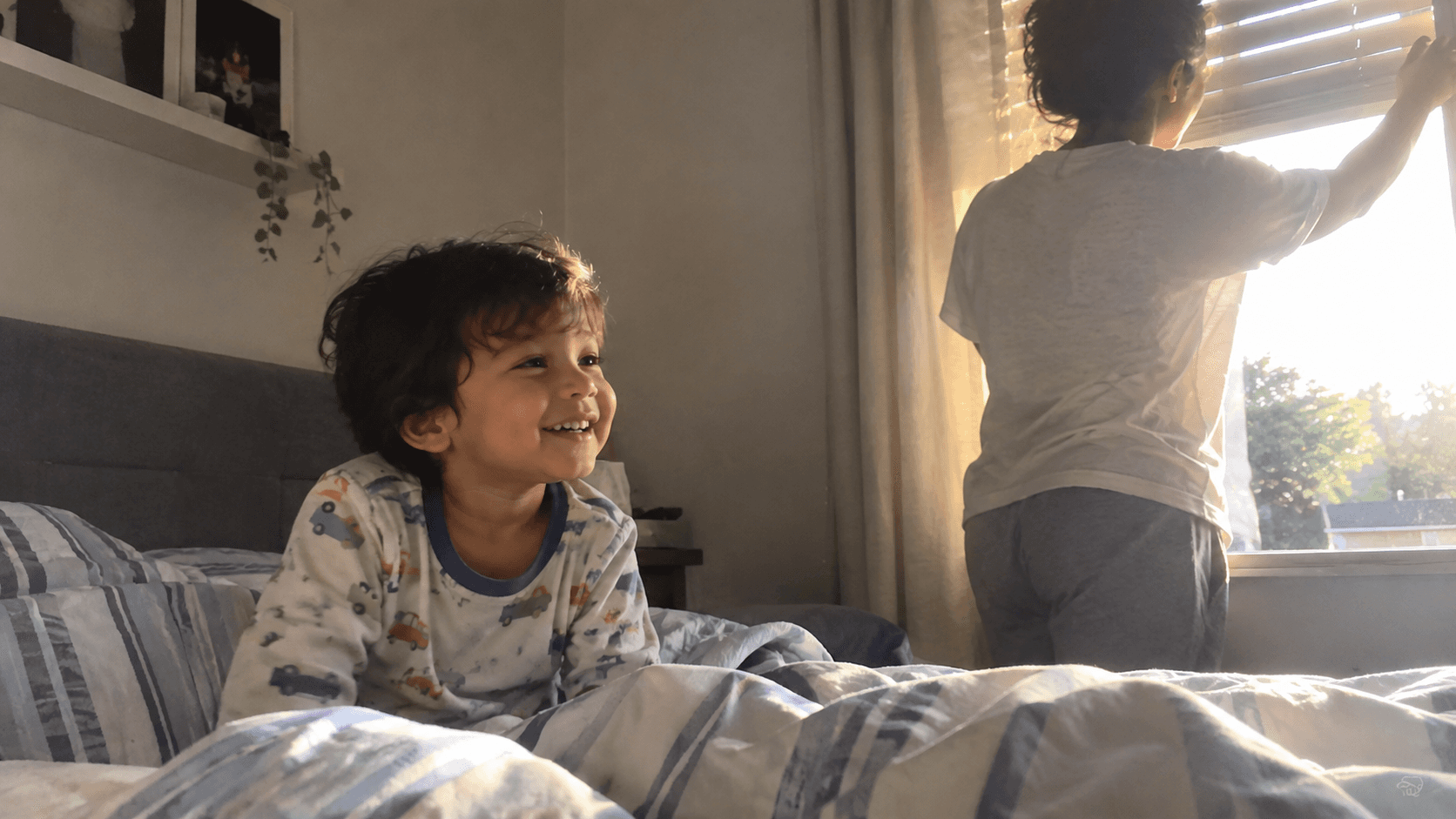
Toddlers
Gratitude starts with noticing. Toddlers can begin to recognize kind acts and copy the words and gestures they see adults use.
Try this
Say your own thank-yous out loud
Name kind acts as they happen
Accept a wave or hug as their 'thank you'


Parenting Tips

"What do you say?" It's one of the most common phrases parents use, and for good reason. Teaching children to say thank you is an important part of good manners. But researchers who study how children develop gratitude say that real thankfulness goes deeper than the words.
The Raising Grateful Children project at the University of North Carolina describes gratitude as four connected moments: noticing something good someone did, thinking about why they did it, feeling the warmth of that kindness, and then doing something to show appreciation. A polite thank-you covers only the last step.
The good news is that these moments don't require special lessons. Researchers found that gratitude is learned mostly through small, everyday conversations between parents and children, the kind that happen at breakfast, in the car, or after a visit with grandparents.
Researchers at the University of North Carolina describe gratitude as four small moments: notice, think, feel, and do. Step through them with an everyday example.
Gratitude grows gradually, and what it looks like at 2 is very different from what it looks like at 6. Toddlers are just beginning to notice kind acts and copy the words and gestures they see adults use. Preschoolers can start connecting a kind act to a feeling. By around age 6, research shows, children can tell the difference between a polite thank-you and genuine gratitude.
That means expectations should match the stage. A toddler's wave or hug is a perfectly good "thank you." What matters most at this age is that children see gratitude modeled again and again by the adults around them.
As the holiday season begins, families have plenty of natural chances to practice: thank-you drawings for grandparents, sharing one good thing at dinner, or noticing the people who help us every day.
Gratitude starts with noticing. Toddlers can begin to recognize kind acts and copy the words and gestures they see adults use.
Preschoolers can start connecting a kind act to a feeling. Simple questions about why someone helped begin to make sense.
Around age 6, children begin to tell the difference between polite thank-yous and real gratitude, and can think about what others gave up to help.
Each layer covers a different kind of risk, and together they create a much stronger safety net than any one step alone. A locked gate doesn't remove the need for supervision, and swim lessons don't remove the need for a life jacket on a boat.
The AAP recommends staying within arm's reach of young children in or near any water, including bathtubs and small pools. Assign one adult as the dedicated 'water watcher' with no phones or distractions.
Four-sided pool fencing with a self-latching gate can prevent more than half of all swimming pool drownings among young children by removing unsupervised access during non-swim times.
Formal swim lessons can begin after a child's first birthday. Skills alone don't prevent drowning, but they add an important layer alongside supervision and barriers.
Coast Guard-approved life jackets are far more reliable than inflatable arm floaties or toys, especially around boats, lakes, and open water where conditions change quickly.
Keeping a phone poolside and having at least one caregiver trained in CPR can make a critical difference in the rare moments when the other layers aren't enough.
"What do you say?" It's one of the most common phrases parents use, and for good reason. Teaching children to say thank you is an important part of good manners. But researchers who study how children develop gratitude say that real thankfulness goes deeper than the words.
The Raising Grateful Children project at the University of North Carolina describes gratitude as four connected moments: noticing something good someone did, thinking about why they did it, feeling the warmth of that kindness, and then doing something to show appreciation. A polite thank-you covers only the last step.
The good news is that these moments don't require special lessons. Researchers found that gratitude is learned mostly through small, everyday conversations between parents and children, the kind that happen at breakfast, in the car, or after a visit with grandparents.
Gratitude brings up real, practical questions for parents, especially around forced thank-yous and how much to expect from little ones. Here are the ones we hear most often.
Gratitude brings up real, practical questions for parents, especially around forced thank-yous and how much to expect from little ones. Here are the ones we hear most often.
Gratitude develops gradually. Toddlers begin by noticing kind acts and copying adults, preschoolers start linking those acts to feelings, and research from the University of North Carolina found that children as young as 6 can tell the difference between a polite thank-you and genuine gratitude.
Gratitude brings up real, practical questions for parents, especially around forced thank-yous and how much to expect from little ones. Here are the ones we hear most often.
Raising a grateful child isn't about perfect manners or a single holiday lesson. It's built in hundreds of small moments, when a parent notices a kind act out loud, asks how something felt, or lets a child choose their own way to say thank you.
At Little Einsteins Academy of Tampa, children practice noticing kindness, sharing, and caring for friends throughout the day, small moments families can build on at home this season and all year long.
At Little Einsteins Academy of Tampa, children practice noticing kindness, sharing, and caring for friends in small moments throughout the day.
Disclaimer: This article is for general educational purposes only. Every child develops social and emotional skills at their own pace. Families with questions about their child's development can talk with their pediatrician. Little Einsteins Academy of Tampa is a licensed early education center regulated by the Florida Department of Children and Families (DCF).
Categories
Recent post