Touch supervision, every time
The AAP recommends staying within arm's reach of young children in or near any water, including bathtubs and small pools. Assign one adult as the dedicated 'water watcher' with no phones or distractions.


Early Learning
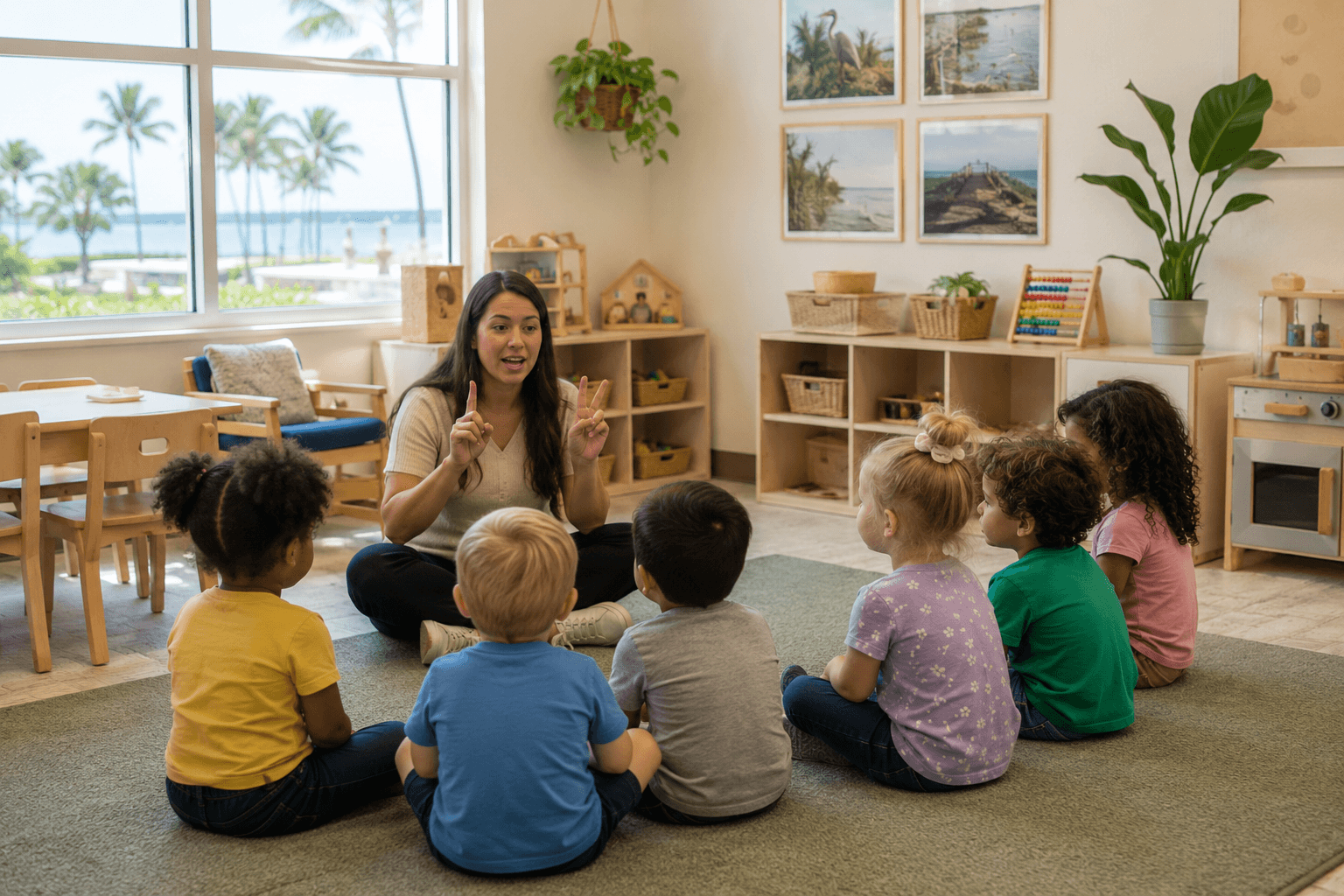
Listening and following directions are everyday skills that make a big difference in how children experience daycare, home, and later school. When children can pay attention, understand a simple request, and act on it, they are safer, more independent, and better able to participate in learning and play. Guidance on school readiness notes that this skill is about a child’s ability to do what a parent or teacher asks, showing listening by following instructions as best as they can.
These abilities do not appear overnight. Young children learn to listen and follow directions gradually as adults give clear, age-appropriate instructions, reduce distractions, and allow time for processing. Practical resources for families and educators recommend getting a child’s attention first, using short and specific directions, limiting the number of steps, and checking for understanding.
Listening and following directions are everyday skills that make a big difference in how children experience daycare, home, and later school. When children can pay attention, understand a simple request, and act on it, they are safer, more independent, and better able to participate in learning and play. Guidance on school readiness notes that this skill is about a child’s ability to do what a parent or teacher asks, showing listening by following instructions as best as they can.
These abilities do not appear overnight. Young children learn to listen and follow directions gradually as adults give clear, age-appropriate instructions, reduce distractions, and allow time for processing. Practical resources for families and educators recommend getting a child’s attention first, using short and specific directions, limiting the number of steps, and checking for understanding.
As children move toward preschool and kindergarten, expectations increase. For example, one school readiness resource notes that directions with two or three steps are appropriate for kindergarten-age children, while directions with too many steps can be confusing. Strong listening and following-directions skills are part of broader social-emotional development and support participation in classroom routines, group activities, and peer interactions.
A quality daycare environment gives children frequent, low-pressure practice with listening and following directions throughout the day. Teachers lead group routines, songs, and games that invite children to listen for cues and respond, such as moving to a certain spot, putting away toys, or copying actions. Simple strategies that experts recommend include gaining a child’s attention before speaking, eliminating major distractions when giving instructions, and speaking calmly and clearly.
Daily schedules and predictable routines also help. Head Start guidance explains that consistent schedules and step-by-step routines help children feel safe, know what comes next, and learn how to do tasks independently, which makes it easier for them to follow classroom expectations. When routines are predictable, children can focus more on listening to the details instead of worrying about what will happen next.
As children move toward preschool and kindergarten, expectations increase. For example, one school readiness resource notes that directions with two or three steps are appropriate for kindergarten-age children, while directions with too many steps can be confusing. Strong listening and following-directions skills are part of broader social-emotional development and support participation in classroom routines, group activities, and peer interactions.
A quality daycare environment gives children frequent, low-pressure practice with listening and following directions throughout the day. Teachers lead group routines, songs, and games that invite children to listen for cues and respond, such as moving to a certain spot, putting away toys, or copying actions. Simple strategies that experts recommend include gaining a child’s attention before speaking, eliminating major distractions when giving instructions, and speaking calmly and clearly.
Daily schedules and predictable routines also help. Head Start guidance explains that consistent schedules and step-by-step routines help children feel safe, know what comes next, and learn how to do tasks independently, which makes it easier for them to follow classroom expectations. When routines are predictable, children can focus more on listening to the details instead of worrying about what will happen next.
As children move toward preschool and kindergarten, expectations increase. For example, one school readiness resource notes that directions with two or three steps are appropriate for kindergarten-age children, while directions with too many steps can be confusing. Strong listening and following-directions skills are part of broader social-emotional development and support participation in classroom routines, group activities, and peer interactions.
A quality daycare environment gives children frequent, low-pressure practice with listening and following directions throughout the day. Teachers lead group routines, songs, and games that invite children to listen for cues and respond, such as moving to a certain spot, putting away toys, or copying actions. Simple strategies that experts recommend include gaining a child’s attention before speaking, eliminating major distractions when giving instructions, and speaking calmly and clearly.
Daily schedules and predictable routines also help. Head Start guidance explains that consistent schedules and step-by-step routines help children feel safe, know what comes next, and learn how to do tasks independently, which makes it easier for them to follow classroom expectations. When routines are predictable, children can focus more on listening to the details instead of worrying about what will happen next.
Each layer covers a different kind of risk, and together they create a much stronger safety net than any one step alone. A locked gate doesn't remove the need for supervision, and swim lessons don't remove the need for a life jacket on a boat.
The AAP recommends staying within arm's reach of young children in or near any water, including bathtubs and small pools. Assign one adult as the dedicated 'water watcher' with no phones or distractions.
Four-sided pool fencing with a self-latching gate can prevent more than half of all swimming pool drownings among young children by removing unsupervised access during non-swim times.
Formal swim lessons can begin after a child's first birthday. Skills alone don't prevent drowning, but they add an important layer alongside supervision and barriers.
Coast Guard-approved life jackets are far more reliable than inflatable arm floaties or toys, especially around boats, lakes, and open water where conditions change quickly.
Keeping a phone poolside and having at least one caregiver trained in CPR can make a critical difference in the rare moments when the other layers aren't enough.
Children develop attention, listening, and direction-following skills over time through routines, games, calm guidance, and practice at home and in daycare.
Each layer covers a different kind of risk, and together they create a much stronger safety net than any one step alone. A locked gate doesn't remove the need for supervision, and swim lessons don't remove the need for a life jacket on a boat.
The AAP recommends staying within arm's reach of young children in or near any water, including bathtubs and small pools. Assign one adult as the dedicated 'water watcher' with no phones or distractions.
Four-sided pool fencing with a self-latching gate can prevent more than half of all swimming pool drownings among young children by removing unsupervised access during non-swim times.
Formal swim lessons can begin after a child's first birthday. Skills alone don't prevent drowning, but they add an important layer alongside supervision and barriers.
Coast Guard-approved life jackets are far more reliable than inflatable arm floaties or toys, especially around boats, lakes, and open water where conditions change quickly.
Keeping a phone poolside and having at least one caregiver trained in CPR can make a critical difference in the rare moments when the other layers aren't enough.
Circle time songs, claps, and simple responses help children practice listening for cues and responding as a group.
Games like “Simon Says”, freeze dance, or color-shape paths build listening, self-control, and the ability to follow step-by-step directions.
Predictable routines like “first clean up, then snack” teach children to listen for routine cues and complete simple tasks in order.
Listening to stories, using picture cues, and asking children to act out instructions help connect listening with understanding.
Listening and following directions are everyday skills that make a big difference in how children experience daycare, home, and later school. When children can pay attention, understand a simple request, and act on it, they are safer, more independent, and better able to participate in learning and play. Guidance on school readiness notes that this skill is about a child’s ability to do what a parent or teacher asks, showing listening by following instructions as best as they can.
These abilities do not appear overnight. Young children learn to listen and follow directions gradually as adults give clear, age-appropriate instructions, reduce distractions, and allow time for processing. Practical resources for families and educators recommend getting a child’s attention first, using short and specific directions, limiting the number of steps, and checking for understanding.
Parents can support the same skills at home with simple activities. Practical resources suggest starting with one-step directions for very young children, such as “Put the block in the box,” and gradually moving to two-step directions, like “Pick up your shoes and put them by the door,” as children are ready. Games such as “Simon Says,” movement activities on colored shapes, and “listen and draw” tasks are also recommended as playful ways to strengthen listening and direction-following.
It is normal for children to need reminders and practice when it comes to listening and following directions. Experts on early childhood behavior emphasize that many listening challenges are about development, attention, environment, and clarity of instructions rather than a child “not caring.” Recommendations often include making sure the child has your attention, using simple language, offering visual supports, and giving a few seconds of quiet time for the instruction to register.
Social-emotional development resources also highlight how positive adult-child relationships and calm, respectful communication help children stay engaged and learn to cooperate over time. When teachers and parents combine clear expectations with warmth and patience, children are more likely to listen, follow through, and feel successful.
Parents can support the same skills at home with simple activities. Practical resources suggest starting with one-step directions for very young children, such as “Put the block in the box,” and gradually moving to two-step directions, like “Pick up your shoes and put them by the door,” as children are ready. Games such as “Simon Says,” movement activities on colored shapes, and “listen and draw” tasks are also recommended as playful ways to strengthen listening and direction-following.
It is normal for children to need reminders and practice when it comes to listening and following directions. Experts on early childhood behavior emphasize that many listening challenges are about development, attention, environment, and clarity of instructions rather than a child “not caring.” Recommendations often include making sure the child has your attention, using simple language, offering visual supports, and giving a few seconds of quiet time for the instruction to register.
Social-emotional development resources also highlight how positive adult-child relationships and calm, respectful communication help children stay engaged and learn to cooperate over time. When teachers and parents combine clear expectations with warmth and patience, children are more likely to listen, follow through, and feel successful.
Parents can support the same skills at home with simple activities. Practical resources suggest starting with one-step directions for very young children, such as “Put the block in the box,” and gradually moving to two-step directions, like “Pick up your shoes and put them by the door,” as children are ready. Games such as “Simon Says,” movement activities on colored shapes, and “listen and draw” tasks are also recommended as playful ways to strengthen listening and direction-following.
It is normal for children to need reminders and practice when it comes to listening and following directions. Experts on early childhood behavior emphasize that many listening challenges are about development, attention, environment, and clarity of instructions rather than a child “not caring.” Recommendations often include making sure the child has your attention, using simple language, offering visual supports, and giving a few seconds of quiet time for the instruction to register.
Social-emotional development resources also highlight how positive adult-child relationships and calm, respectful communication help children stay engaged and learn to cooperate over time. When teachers and parents combine clear expectations with warmth and patience, children are more likely to listen, follow through, and feel successful.
It looks like responding to their name, stopping when asked, completing simple one-step tasks, and gradually following longer, age-appropriate directions.
If a child consistently struggles with following age-appropriate directions across settings, or a caregiver has ongoing concerns about attention or understanding, it is appropriate to talk with the pediatrician and early childhood professionals. Monitoring development and seeking guidance when needed helps families decide whether additional evaluation or support might be helpful.
Choosing a daycare is not just about the building or the schedule. Families also look for a place where routines, communication, and expectations are clear and where children can safely practice listening and following directions in a supportive environment. At Little Einsteins Academy of Tampa, families can explore programs that combine play-based learning, predictable routines, and caring teacher-child relationships.
If a child consistently struggles with following age-appropriate directions across settings, or a caregiver has ongoing concerns about attention or understanding, it is appropriate to talk with the pediatrician and early childhood professionals. Monitoring development and seeking guidance when needed helps families decide whether additional evaluation or support might be helpful.
Choosing a daycare is not just about the building or the schedule. Families also look for a place where routines, communication, and expectations are clear and where children can safely practice listening and following directions in a supportive environment. At Little Einsteins Academy of Tampa, families can explore programs that combine play-based learning, predictable routines, and caring teacher-child relationships.
If a child consistently struggles with following age-appropriate directions across settings, or a caregiver has ongoing concerns about attention or understanding, it is appropriate to talk with the pediatrician and early childhood professionals. Monitoring development and seeking guidance when needed helps families decide whether additional evaluation or support might be helpful.
Choosing a daycare is not just about the building or the schedule. Families also look for a place where routines, communication, and expectations are clear and where children can safely practice listening and following directions in a supportive environment. At Little Einsteins Academy of Tampa, families can explore programs that combine play-based learning, predictable routines, and caring teacher-child relationships.
At Little Einsteins Academy of Tampa, children build listening skills and confidence through predictable routines, play-based learning, and gentle, clear guidance from caring teachers.
Learn more about our programs, meet our team, and schedule a tour to see how our routines, classrooms, and teachers help children feel safe, heard, and ready to learn.
Disclaimer: This content is for general educational purposes only and is not medical, developmental, or legal advice. Children develop at different rates. If you have concerns about your child’s listening, attention, or development, speak with your pediatrician or a qualified specialist. Little Einsteins Academy of Tampa operates under Florida DCF licensing requirements.
Categorías
Publicación reciente


