Touch supervision, every time
The AAP recommends staying within arm's reach of young children in or near any water, including bathtubs and small pools. Assign one adult as the dedicated 'water watcher' with no phones or distractions.


Summer Camp
For Tampa families, summer brings a familiar question: what do we do with the kids?
School's out. Routines disappear. The Florida heat makes staying indoors tempting — but children who spend summer without structured activity often show regression in the social, emotional, and academic skills they spent the whole school year building. Pediatricians and child development experts are consistent on this point: summer learning loss is real, and it disproportionately affects younger children.
The answer doesn't have to be complicated. A well-designed summer camp program gives children the structure, social connection, and enrichment they need — while still feeling like the freedom and fun that summer is supposed to be.
At Little Einsteins Academy of Tampa, our summer program is designed specifically for children ages 6 weeks through 12 years. It combines the enrichment and intentionality of our school-year program with summer-specific themes, outdoor exploration, creative projects, and the kind of unstructured play that children need to recharge.
The "summer slide" — the learning loss that happens when children go weeks without structured activity — is well documented in research. For preschool-age children, the effects show up not just in academic skills but in emotional regulation, social skills, and attention span.
Children who maintain consistent routines and peer interaction through summer arrive at the next school year ahead — not just academically, but in confidence, social readiness, and adaptability. Those who spend summer entirely unstructured often need the first several weeks of fall just to readjust.
This doesn't mean summer should feel like school. The best summer programs balance structured learning with genuine play, creative freedom, and outdoor exploration. That balance is exactly what LEAO's summer program is built around.
Summer at Little Einsteins Academy of Tampa is organized around weekly themes that change throughout the program — keeping children engaged, curious, and always discovering something new. Every week brings a fresh set of activities, crafts, outdoor challenges, and group experiences built around that week's theme.
What children experience in the LEAO summer program:
For Tampa families, summer brings a familiar question: what do we do with the kids?
School's out. Routines disappear. The Florida heat makes staying indoors tempting — but children who spend summer without structured activity often show regression in the social, emotional, and academic skills they spent the whole school year building. Pediatricians and child development experts are consistent on this point: summer learning loss is real, and it disproportionately affects younger children.
The answer doesn't have to be complicated. A well-designed summer camp program gives children the structure, social connection, and enrichment they need — while still feeling like the freedom and fun that summer is supposed to be.
At Little Einsteins Academy of Tampa, our summer program is designed specifically for children ages 6 weeks through 12 years. It combines the enrichment and intentionality of our school-year program with summer-specific themes, outdoor exploration, creative projects, and the kind of unstructured play that children need to recharge.
The "summer slide" — the learning loss that happens when children go weeks without structured activity — is well documented in research. For preschool-age children, the effects show up not just in academic skills but in emotional regulation, social skills, and attention span.
Children who maintain consistent routines and peer interaction through summer arrive at the next school year ahead — not just academically, but in confidence, social readiness, and adaptability. Those who spend summer entirely unstructured often need the first several weeks of fall just to readjust.
This doesn't mean summer should feel like school. The best summer programs balance structured learning with genuine play, creative freedom, and outdoor exploration. That balance is exactly what LEAO's summer program is built around.
Summer at Little Einsteins Academy of Tampa is organized around weekly themes that change throughout the program — keeping children engaged, curious, and always discovering something new. Every week brings a fresh set of activities, crafts, outdoor challenges, and group experiences built around that week's theme.
What children experience in the LEAO summer program:
A typical summer day at LEAO includes a balance of structured and free-choice activities. Mornings usually begin with circle time and the day's theme introduction, followed by rotating activity stations — art, science exploration, sensory play, or literacy — before transitioning to outdoor time on our 2-acre campus. Afternoons include quieter activities, creative projects, and free play before pickup.
Every age group — from infants and toddlers through school-age children — has programming designed specifically for their developmental stage. Older children in our school-age program take on more complex projects, team challenges, and leadership opportunities within the camp community.
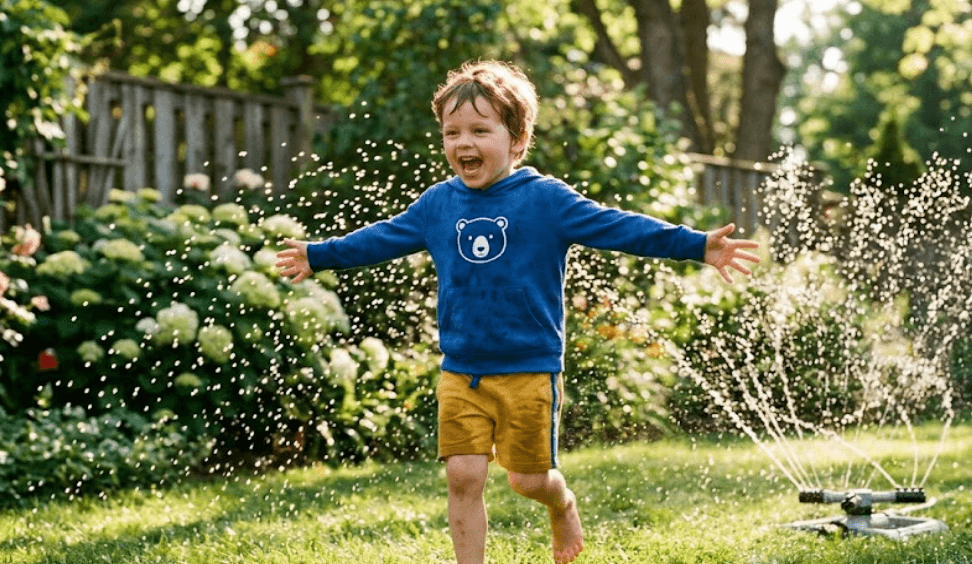
Tampa summers are hot. Really hot. Our program accounts for this — outdoor time is scheduled for cooler morning hours, all outdoor areas have shade, and hydration is built into the daily routine. Water play and sensory cooling activities are regular features of summer programming, not occasional treats.
Children don't need to miss out on outdoor exploration just because it's Florida in July. They need a program that plans intelligently around the weather — and that's exactly what we do.
For many parents, summer camp feels like a childcare solution — a practical answer to the "what do we do" question. That's a completely valid reason to enroll. But the developmental benefits of a high-quality summer program extend well beyond convenience.
A typical summer day at LEAO includes a balance of structured and free-choice activities. Mornings usually begin with circle time and the day's theme introduction, followed by rotating activity stations — art, science exploration, sensory play, or literacy — before transitioning to outdoor time on our 2-acre campus. Afternoons include quieter activities, creative projects, and free play before pickup.
Every age group — from infants and toddlers through school-age children — has programming designed specifically for their developmental stage. Older children in our school-age program take on more complex projects, team challenges, and leadership opportunities within the camp community.
Tampa summers are hot. Really hot. Our program accounts for this — outdoor time is scheduled for cooler morning hours, all outdoor areas have shade, and hydration is built into the daily routine. Water play and sensory cooling activities are regular features of summer programming, not occasional treats.
Children don't need to miss out on outdoor exploration just because it's Florida in July. They need a program that plans intelligently around the weather — and that's exactly what we do.
For many parents, summer camp feels like a childcare solution — a practical answer to the "what do we do" question. That's a completely valid reason to enroll. But the developmental benefits of a high-quality summer program extend well beyond convenience.
A typical summer day at LEAO includes a balance of structured and free-choice activities. Mornings usually begin with circle time and the day's theme introduction, followed by rotating activity stations — art, science exploration, sensory play, or literacy — before transitioning to outdoor time on our 2-acre campus. Afternoons include quieter activities, creative projects, and free play before pickup.
Every age group — from infants and toddlers through school-age children — has programming designed specifically for their developmental stage. Older children in our school-age program take on more complex projects, team challenges, and leadership opportunities within the camp community.
Tampa summers are hot. Really hot. Our program accounts for this — outdoor time is scheduled for cooler morning hours, all outdoor areas have shade, and hydration is built into the daily routine. Water play and sensory cooling activities are regular features of summer programming, not occasional treats.
Children don't need to miss out on outdoor exploration just because it's Florida in July. They need a program that plans intelligently around the weather — and that's exactly what we do.
For many parents, summer camp feels like a childcare solution — a practical answer to the "what do we do" question. That's a completely valid reason to enroll. But the developmental benefits of a high-quality summer program extend well beyond convenience.
Each layer covers a different kind of risk, and together they create a much stronger safety net than any one step alone. A locked gate doesn't remove the need for supervision, and swim lessons don't remove the need for a life jacket on a boat.
The AAP recommends staying within arm's reach of young children in or near any water, including bathtubs and small pools. Assign one adult as the dedicated 'water watcher' with no phones or distractions.
Four-sided pool fencing with a self-latching gate can prevent more than half of all swimming pool drownings among young children by removing unsupervised access during non-swim times.
Formal swim lessons can begin after a child's first birthday. Skills alone don't prevent drowning, but they add an important layer alongside supervision and barriers.
Coast Guard-approved life jackets are far more reliable than inflatable arm floaties or toys, especially around boats, lakes, and open water where conditions change quickly.
Keeping a phone poolside and having at least one caregiver trained in CPR can make a critical difference in the rare moments when the other layers aren't enough.
Weekly themed art projects using paint, clay, collage, and mixed media. Children create and take home something new every week.
Hands-on experiments and discovery activities connected to each week's theme — from volcanoes to color-mixing to nature science.
Daily time on our 2-acre campus — nature walks, water play, gardening, and outdoor games scheduled during cooler morning hours.
Theme-based read-alouds, dramatic play, and creative storytelling activities that keep language and literacy skills sharp through summer.
Songs, rhythm activities, and movement games that build coordination, listening skills, and pure summer joy.
Age-appropriate building, problem-solving, and engineering challenges that develop critical thinking while feeling like play.
Each layer covers a different kind of risk, and together they create a much stronger safety net than any one step alone. A locked gate doesn't remove the need for supervision, and swim lessons don't remove the need for a life jacket on a boat.
The AAP recommends staying within arm's reach of young children in or near any water, including bathtubs and small pools. Assign one adult as the dedicated 'water watcher' with no phones or distractions.
Four-sided pool fencing with a self-latching gate can prevent more than half of all swimming pool drownings among young children by removing unsupervised access during non-swim times.
Formal swim lessons can begin after a child's first birthday. Skills alone don't prevent drowning, but they add an important layer alongside supervision and barriers.
Coast Guard-approved life jackets are far more reliable than inflatable arm floaties or toys, especially around boats, lakes, and open water where conditions change quickly.
Keeping a phone poolside and having at least one caregiver trained in CPR can make a critical difference in the rare moments when the other layers aren't enough.
Children who maintain structured activity through summer arrive at the next school year ahead in literacy, math concepts, and attention span — not just catching up.
Regular peer interaction keeps cooperation, conflict resolution, and communication skills active. Children who go weeks without group play often need time to readjust socially in fall.
Weekly themes expose children to subjects and activities they wouldn't encounter at home — building curiosity, adaptability, and a sense of accomplishment.
Consistent routines, familiar caregivers, and structured transitions keep emotional regulation skills strong through summer — reducing the behavioral regression many families see in unstructured break periods.
Daily outdoor time, movement activities, and water play ensure children stay physically engaged through Tampa's summer — not sedentary on screens indoors.
For Tampa families, summer brings a familiar question: what do we do with the kids?
School's out. Routines disappear. The Florida heat makes staying indoors tempting — but children who spend summer without structured activity often show regression in the social, emotional, and academic skills they spent the whole school year building. Pediatricians and child development experts are consistent on this point: summer learning loss is real, and it disproportionately affects younger children.
The answer doesn't have to be complicated. A well-designed summer camp program gives children the structure, social connection, and enrichment they need — while still feeling like the freedom and fun that summer is supposed to be.
At Little Einsteins Academy of Tampa, our summer program is designed specifically for children ages 6 weeks through 12 years. It combines the enrichment and intentionality of our school-year program with summer-specific themes, outdoor exploration, creative projects, and the kind of unstructured play that children need to recharge.
The "summer slide" — the learning loss that happens when children go weeks without structured activity — is well documented in research. For preschool-age children, the effects show up not just in academic skills but in emotional regulation, social skills, and attention span.
Children who maintain consistent routines and peer interaction through summer arrive at the next school year ahead — not just academically, but in confidence, social readiness, and adaptability. Those who spend summer entirely unstructured often need the first several weeks of fall just to readjust.
This doesn't mean summer should feel like school. The best summer programs balance structured learning with genuine play, creative freedom, and outdoor exploration. That balance is exactly what LEAO's summer program is built around.
Summer at Little Einsteins Academy of Tampa is organized around weekly themes that change throughout the program — keeping children engaged, curious, and always discovering something new. Every week brings a fresh set of activities, crafts, outdoor challenges, and group experiences built around that week's theme.
What children experience in the LEAO summer program:
At Little Einsteins Academy of Tampa, summer camp isn't babysitting with a theme. It's a full enrichment program designed to keep your child growing, thriving, and having the kind of summer they'll actually remember.
What's included in the LEAO summer program
Spots fill fast — especially for school-age children.
Contact us today to check availability and reserve your child's spot for summer.
Summer program availability is subject to enrollment capacity. Contact us directly for current openings, pricing, and schedule details. Little Einsteins Academy of Tampa is fully licensed by the Florida Department of Children and Families.
Categorías
Publicación reciente


