Touch supervision, every time
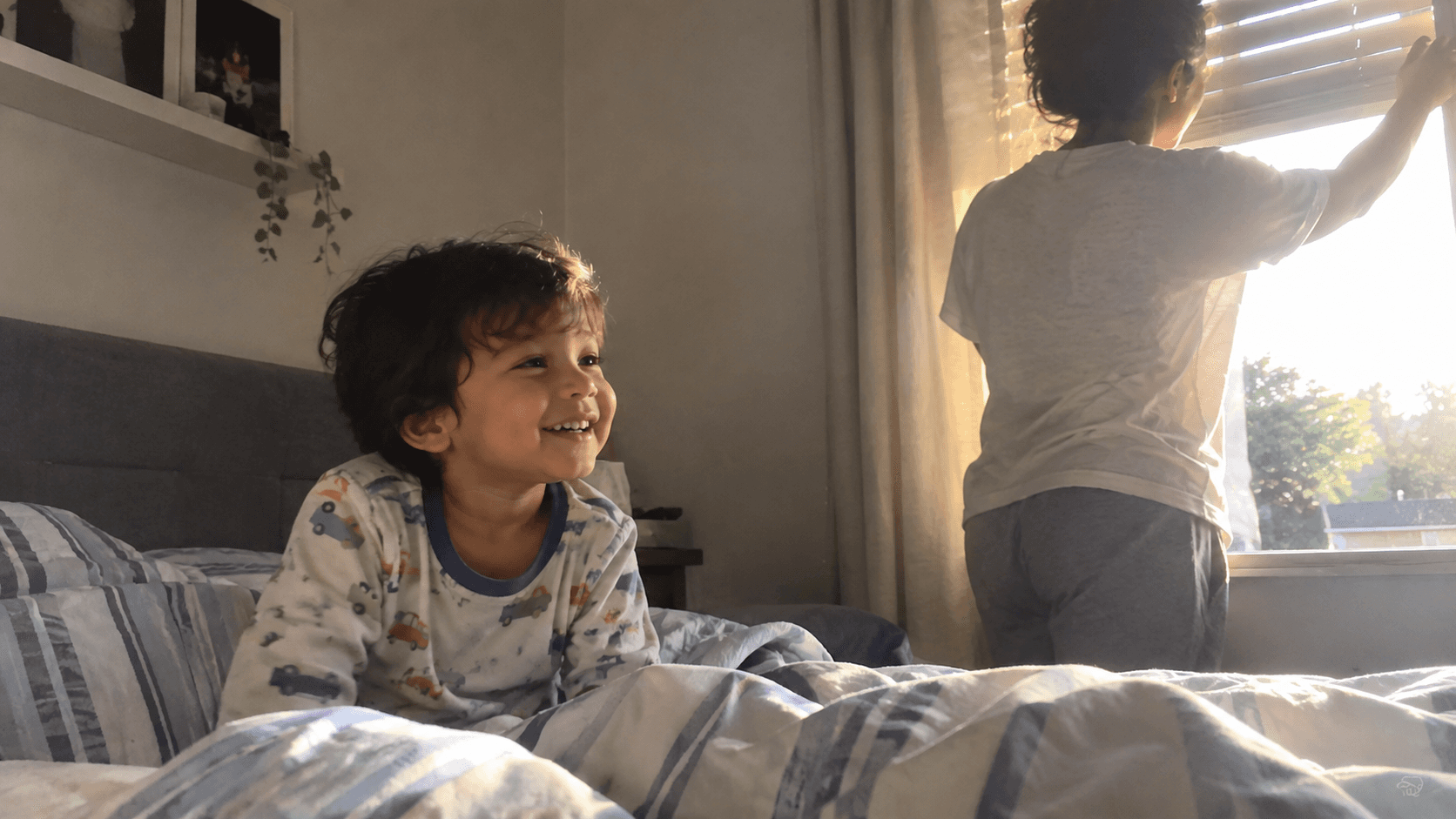
The AAP recommends staying within arm's reach of young children in or near any water, including bathtubs and small pools. Assign one adult as the dedicated 'water watcher' with no phones or distractions.


Social-Emotional Learning
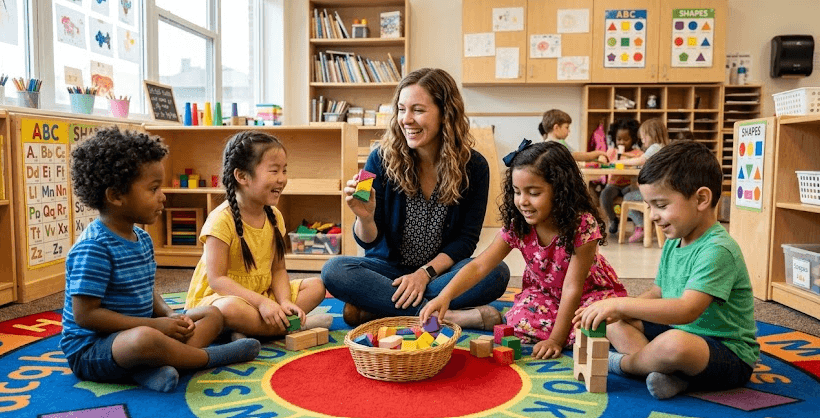
Tampa is one of the most culturally diverse cities in Florida. Its families speak dozens of languages, celebrate different traditions, and bring different perspectives to every aspect of community life — including the early childhood classroom.
For young children, this diversity isn't just a backdrop. It's an active part of their education.
Research on early childhood development consistently shows that children who learn alongside peers from different backgrounds — and whose caregivers intentionally celebrate that diversity — develop stronger social skills, deeper empathy, more flexible thinking, and a broader worldview. These aren't abstract outcomes. They're measurable, practical advantages that show up in how children relate to others, solve problems, and navigate a complex world.
At Little Einsteins Academy of Tampa, our community reflects the richness of the Tampa Bay area. Families from different cultural, linguistic, and ethnic backgrounds share classrooms, celebrations, and daily routines — and that diversity is treated as one of our greatest educational resources.
The case for multicultural learning in early childhood isn't built on ideology — it's built on developmental science.
Children begin noticing racial and ethnic differences as early as 6 months of age and develop implicit attitudes about those differences by age 3 to 4. This means that the early childhood years — the exact years children spend in daycare and preschool — are the most critical window for shaping healthy, inclusive attitudes toward people who are different from themselves.
Environments that expose children to diversity early, and that treat that diversity as positive and normal, produce measurable differences in how children think about fairness, inclusion, and other people's perspectives. These skills — perspective-taking, empathy, and openness to difference — are among the strongest predictors of success in both academic and social settings.
Silence is not neutral. Children who grow up in environments where diversity is never discussed or celebrated don't develop colorblind attitudes — they develop attitudes shaped by whatever messages they absorb from media, peers, and the broader culture. Intentional multicultural education gives children a positive foundation before those other influences take hold.
The impact of a culturally rich learning environment extends across every domain of child development — cognitive, social, emotional, and linguistic. Here's what the research shows:
Tampa is one of the most culturally diverse cities in Florida. Its families speak dozens of languages, celebrate different traditions, and bring different perspectives to every aspect of community life — including the early childhood classroom.
For young children, this diversity isn't just a backdrop. It's an active part of their education.
Research on early childhood development consistently shows that children who learn alongside peers from different backgrounds — and whose caregivers intentionally celebrate that diversity — develop stronger social skills, deeper empathy, more flexible thinking, and a broader worldview. These aren't abstract outcomes. They're measurable, practical advantages that show up in how children relate to others, solve problems, and navigate a complex world.
At Little Einsteins Academy of Tampa, our community reflects the richness of the Tampa Bay area. Families from different cultural, linguistic, and ethnic backgrounds share classrooms, celebrations, and daily routines — and that diversity is treated as one of our greatest educational resources.
The case for multicultural learning in early childhood isn't built on ideology — it's built on developmental science.
Children begin noticing racial and ethnic differences as early as 6 months of age and develop implicit attitudes about those differences by age 3 to 4. This means that the early childhood years — the exact years children spend in daycare and preschool — are the most critical window for shaping healthy, inclusive attitudes toward people who are different from themselves.
Environments that expose children to diversity early, and that treat that diversity as positive and normal, produce measurable differences in how children think about fairness, inclusion, and other people's perspectives. These skills — perspective-taking, empathy, and openness to difference — are among the strongest predictors of success in both academic and social settings.
Silence is not neutral. Children who grow up in environments where diversity is never discussed or celebrated don't develop colorblind attitudes — they develop attitudes shaped by whatever messages they absorb from media, peers, and the broader culture. Intentional multicultural education gives children a positive foundation before those other influences take hold.
The impact of a culturally rich learning environment extends across every domain of child development — cognitive, social, emotional, and linguistic. Here's what the research shows:
Multicultural education in early childhood isn't a curriculum add-on or a special celebration once a year. It's woven into the daily environment and routine of a classroom that takes it seriously.
In practice, it looks like:
Books and materials that reflect many cultures — not just in February or during special units, but as part of the permanent classroom library and learning materials. Children should see faces, families, and stories that look like their own — and faces, families, and stories that don't.
Celebrating real cultural traditions — not in a simplified or stereotyped way, but by inviting families to share their own traditions, foods, and stories with the class. The parent is the expert; the classroom is the audience.
Using children's home languages — acknowledging and honoring the languages spoken at home, even in an English-dominant classroom. Greeting a child in their home language, learning a few words, and treating multilingualism as an asset rather than a challenge.
Discussing differences directly and positively — when children ask questions about why someone looks different or speaks differently, the answer is warm, honest, and affirming. Silence or redirection teaches children that difference is something to avoid talking about.
Representing diverse families in dramatic play — doll families, dress-up materials, and home corner items that reflect the real range of family structures and cultural backgrounds children encounter in their world.
The classroom and the home work best when they reinforce each other. Here are ways parents can extend multicultural learning beyond the daycare walls.
Multicultural education in early childhood isn't a curriculum add-on or a special celebration once a year. It's woven into the daily environment and routine of a classroom that takes it seriously.
In practice, it looks like:
Books and materials that reflect many cultures — not just in February or during special units, but as part of the permanent classroom library and learning materials. Children should see faces, families, and stories that look like their own — and faces, families, and stories that don't.
Celebrating real cultural traditions — not in a simplified or stereotyped way, but by inviting families to share their own traditions, foods, and stories with the class. The parent is the expert; the classroom is the audience.
Using children's home languages — acknowledging and honoring the languages spoken at home, even in an English-dominant classroom. Greeting a child in their home language, learning a few words, and treating multilingualism as an asset rather than a challenge.
Discussing differences directly and positively — when children ask questions about why someone looks different or speaks differently, the answer is warm, honest, and affirming. Silence or redirection teaches children that difference is something to avoid talking about.
Representing diverse families in dramatic play — doll families, dress-up materials, and home corner items that reflect the real range of family structures and cultural backgrounds children encounter in their world.
The classroom and the home work best when they reinforce each other. Here are ways parents can extend multicultural learning beyond the daycare walls.
Multicultural education in early childhood isn't a curriculum add-on or a special celebration once a year. It's woven into the daily environment and routine of a classroom that takes it seriously.
In practice, it looks like:
Books and materials that reflect many cultures — not just in February or during special units, but as part of the permanent classroom library and learning materials. Children should see faces, families, and stories that look like their own — and faces, families, and stories that don't.
Celebrating real cultural traditions — not in a simplified or stereotyped way, but by inviting families to share their own traditions, foods, and stories with the class. The parent is the expert; the classroom is the audience.
Using children's home languages — acknowledging and honoring the languages spoken at home, even in an English-dominant classroom. Greeting a child in their home language, learning a few words, and treating multilingualism as an asset rather than a challenge.
Discussing differences directly and positively — when children ask questions about why someone looks different or speaks differently, the answer is warm, honest, and affirming. Silence or redirection teaches children that difference is something to avoid talking about.
Representing diverse families in dramatic play — doll families, dress-up materials, and home corner items that reflect the real range of family structures and cultural backgrounds children encounter in their world.
The classroom and the home work best when they reinforce each other. Here are ways parents can extend multicultural learning beyond the daycare walls.
Each layer covers a different kind of risk, and together they create a much stronger safety net than any one step alone. A locked gate doesn't remove the need for supervision, and swim lessons don't remove the need for a life jacket on a boat.
The AAP recommends staying within arm's reach of young children in or near any water, including bathtubs and small pools. Assign one adult as the dedicated 'water watcher' with no phones or distractions.
Four-sided pool fencing with a self-latching gate can prevent more than half of all swimming pool drownings among young children by removing unsupervised access during non-swim times.
Formal swim lessons can begin after a child's first birthday. Skills alone don't prevent drowning, but they add an important layer alongside supervision and barriers.
Coast Guard-approved life jackets are far more reliable than inflatable arm floaties or toys, especially around boats, lakes, and open water where conditions change quickly.
Keeping a phone poolside and having at least one caregiver trained in CPR can make a critical difference in the rare moments when the other layers aren't enough.
Exposure to different perspectives — different ways of solving problems, different cultural approaches to everyday situations — exercises children's ability to think flexibly and consider multiple viewpoints. This is a cognitive skill, not just a social one.
Children who regularly interact with peers from different backgrounds develop the ability to imagine how others feel and think. This is the foundation of emotional intelligence — and it develops most powerfully in early childhood, not later.
Multilingual classrooms — where children hear and interact with more than one language — show measurable advantages in vocabulary, phonological awareness, and metalinguistic skills (the ability to think about language itself). Exposure to multiple languages is a cognitive asset.
Navigating friendships across cultural differences requires more active communication — children can't rely on shared assumptions. This extra work builds stronger social skills: clearer expression, more attentive listening, and greater flexibility in social situations.
Children in classrooms that celebrate many cultures — including their own — develop a more secure, positive sense of who they are. Seeing your own background reflected and respected builds the kind of confidence that carries children through school and beyond.
The workplaces, communities, and relationships children will navigate as adults are diverse. Children who develop comfort and curiosity around difference early are better equipped for that world than children who encounter it for the first time at 18.
Each layer covers a different kind of risk, and together they create a much stronger safety net than any one step alone. A locked gate doesn't remove the need for supervision, and swim lessons don't remove the need for a life jacket on a boat.
The AAP recommends staying within arm's reach of young children in or near any water, including bathtubs and small pools. Assign one adult as the dedicated 'water watcher' with no phones or distractions.
Four-sided pool fencing with a self-latching gate can prevent more than half of all swimming pool drownings among young children by removing unsupervised access during non-swim times.
Formal swim lessons can begin after a child's first birthday. Skills alone don't prevent drowning, but they add an important layer alongside supervision and barriers.
Coast Guard-approved life jackets are far more reliable than inflatable arm floaties or toys, especially around boats, lakes, and open water where conditions change quickly.
Keeping a phone poolside and having at least one caregiver trained in CPR can make a critical difference in the rare moments when the other layers aren't enough.
Choose books with main characters from different racial, ethnic, and cultural backgrounds — not just as the subject of the book, but as everyday protagonists having adventures and solving problems. Your child should see both themselves and others in the stories they love.
Food is one of the most accessible and joyful entry points into cultural learning. Cook a dish from another culture together, visit a restaurant outside your usual choices, or explore a cultural market. Food opens conversations naturally.
When your child asks why someone looks different, speaks differently, or has different family traditions — answer them. Warmly, honestly, and at their level. Deflection teaches children that difference is uncomfortable; direct answers teach them it's interesting.
Children who have a secure, celebrated sense of their own cultural identity are more open to others — not less. Share your family's traditions, language, foods, and stories with pride. Cultural identity is the foundation from which children learn to appreciate others.
Playgrounds, community events, libraries, and faith communities that include diverse families give children real, repeated exposure to difference in a positive context. Representation in books and media helps — but real relationships are irreplaceable.
Tampa is one of the most culturally diverse cities in Florida. Its families speak dozens of languages, celebrate different traditions, and bring different perspectives to every aspect of community life — including the early childhood classroom.
For young children, this diversity isn't just a backdrop. It's an active part of their education.
Research on early childhood development consistently shows that children who learn alongside peers from different backgrounds — and whose caregivers intentionally celebrate that diversity — develop stronger social skills, deeper empathy, more flexible thinking, and a broader worldview. These aren't abstract outcomes. They're measurable, practical advantages that show up in how children relate to others, solve problems, and navigate a complex world.
At Little Einsteins Academy of Tampa, our community reflects the richness of the Tampa Bay area. Families from different cultural, linguistic, and ethnic backgrounds share classrooms, celebrations, and daily routines — and that diversity is treated as one of our greatest educational resources.
The case for multicultural learning in early childhood isn't built on ideology — it's built on developmental science.
Children begin noticing racial and ethnic differences as early as 6 months of age and develop implicit attitudes about those differences by age 3 to 4. This means that the early childhood years — the exact years children spend in daycare and preschool — are the most critical window for shaping healthy, inclusive attitudes toward people who are different from themselves.
Environments that expose children to diversity early, and that treat that diversity as positive and normal, produce measurable differences in how children think about fairness, inclusion, and other people's perspectives. These skills — perspective-taking, empathy, and openness to difference — are among the strongest predictors of success in both academic and social settings.
Silence is not neutral. Children who grow up in environments where diversity is never discussed or celebrated don't develop colorblind attitudes — they develop attitudes shaped by whatever messages they absorb from media, peers, and the broader culture. Intentional multicultural education gives children a positive foundation before those other influences take hold.
The impact of a culturally rich learning environment extends across every domain of child development — cognitive, social, emotional, and linguistic. Here's what the research shows:
At Little Einsteins Academy of Tampa, we believe that a classroom that looks like the real world prepares children for the real world. Our diverse community isn't incidental — it's one of the most valuable things we offer every child who walks through our doors.
What multicultural learning looks like at LEAO
Come meet our community.
The best way to understand what a diverse, welcoming classroom looks and feels like is to come experience it. We'd love to show you around.
Little Einsteins Academy of Tampa welcomes families of all backgrounds, cultures, and languages. Our commitment to diversity and inclusion is reflected in our enrollment, our staff, and our daily classroom practice.
Categories
Recent post