Touch supervision, every time
The AAP recommends staying within arm's reach of young children in or near any water, including bathtubs and small pools. Assign one adult as the dedicated 'water watcher' with no phones or distractions.


Early Learning

If you've ever noticed your child is calmer at home when the day follows a predictable rhythm — same wake-up time, same bedtime, meals at consistent hours — you've already seen the power of routine firsthand. At daycare, that same principle shapes everything.
Consistent daily schedules aren't about rigid control. They're about giving young children something their developing brains are deeply wired to crave: predictability. When a child knows what comes next, they can relax into the present moment instead of spending energy bracing for the unknown.
At Little Einsteins Academy of Tampa, structured routines are built into every classroom — adapted to each age group and designed to support the whole child, from emotional regulation to early learning readiness.
Children under five experience time very differently than adults. They don't have the cognitive tools to mentally prepare for transitions, manage uncertainty, or soothe themselves when the unexpected happens. Routines give them those tools externally until they develop them internally.
A predictable schedule helps children in several key ways:
If you've ever noticed your child is calmer at home when the day follows a predictable rhythm — same wake-up time, same bedtime, meals at consistent hours — you've already seen the power of routine firsthand. At daycare, that same principle shapes everything.
Consistent daily schedules aren't about rigid control. They're about giving young children something their developing brains are deeply wired to crave: predictability. When a child knows what comes next, they can relax into the present moment instead of spending energy bracing for the unknown.
At Little Einsteins Academy of Tampa, structured routines are built into every classroom — adapted to each age group and designed to support the whole child, from emotional regulation to early learning readiness.
Children under five experience time very differently than adults. They don't have the cognitive tools to mentally prepare for transitions, manage uncertainty, or soothe themselves when the unexpected happens. Routines give them those tools externally until they develop them internally.
A predictable schedule helps children in several key ways:
A routine for a 4-month-old looks nothing like one for a 4-year-old. At Little Einsteins Academy of Tampa, our daily schedules are tailored to each developmental stage.
A routine for a 4-month-old looks nothing like one for a 4-year-old. At Little Einsteins Academy of Tampa, our daily schedules are tailored to each developmental stage.
A routine for a 4-month-old looks nothing like one for a 4-year-old. At Little Einsteins Academy of Tampa, our daily schedules are tailored to each developmental stage.
Each layer covers a different kind of risk, and together they create a much stronger safety net than any one step alone. A locked gate doesn't remove the need for supervision, and swim lessons don't remove the need for a life jacket on a boat.
The AAP recommends staying within arm's reach of young children in or near any water, including bathtubs and small pools. Assign one adult as the dedicated 'water watcher' with no phones or distractions.
Four-sided pool fencing with a self-latching gate can prevent more than half of all swimming pool drownings among young children by removing unsupervised access during non-swim times.
Formal swim lessons can begin after a child's first birthday. Skills alone don't prevent drowning, but they add an important layer alongside supervision and barriers.
Coast Guard-approved life jackets are far more reliable than inflatable arm floaties or toys, especially around boats, lakes, and open water where conditions change quickly.
Keeping a phone poolside and having at least one caregiver trained in CPR can make a critical difference in the rare moments when the other layers aren't enough.
Each layer covers a different kind of risk, and together they create a much stronger safety net than any one step alone. A locked gate doesn't remove the need for supervision, and swim lessons don't remove the need for a life jacket on a boat.
The AAP recommends staying within arm's reach of young children in or near any water, including bathtubs and small pools. Assign one adult as the dedicated 'water watcher' with no phones or distractions.
Four-sided pool fencing with a self-latching gate can prevent more than half of all swimming pool drownings among young children by removing unsupervised access during non-swim times.
Formal swim lessons can begin after a child's first birthday. Skills alone don't prevent drowning, but they add an important layer alongside supervision and barriers.
Coast Guard-approved life jackets are far more reliable than inflatable arm floaties or toys, especially around boats, lakes, and open water where conditions change quickly.
Keeping a phone poolside and having at least one caregiver trained in CPR can make a critical difference in the rare moments when the other layers aren't enough.
Infant routines follow the child's natural biological rhythm rather than a fixed clock. Our caregivers observe and respond to each baby's individual feeding, sleeping, and wakeful patterns — building a personalized routine that parents can mirror at home.
Key elements of the infants day
If you've ever noticed your child is calmer at home when the day follows a predictable rhythm — same wake-up time, same bedtime, meals at consistent hours — you've already seen the power of routine firsthand. At daycare, that same principle shapes everything.
Consistent daily schedules aren't about rigid control. They're about giving young children something their developing brains are deeply wired to crave: predictability. When a child knows what comes next, they can relax into the present moment instead of spending energy bracing for the unknown.
At Little Einsteins Academy of Tampa, structured routines are built into every classroom — adapted to each age group and designed to support the whole child, from emotional regulation to early learning readiness.
Children under five experience time very differently than adults. They don't have the cognitive tools to mentally prepare for transitions, manage uncertainty, or soothe themselves when the unexpected happens. Routines give them those tools externally until they develop them internally.
A predictable schedule helps children in several key ways:
The most powerful thing parents can do to support their child's adjustment to daycare — and their overall development — is to create consistency between home and school. Children who experience similar rhythms in both environments adapt faster, sleep better, and show fewer behavior challenges.
Here are practical ways to align:
The most powerful thing parents can do to support their child's adjustment to daycare — and their overall development — is to create consistency between home and school. Children who experience similar rhythms in both environments adapt faster, sleep better, and show fewer behavior challenges.
Here are practical ways to align:
The most powerful thing parents can do to support their child's adjustment to daycare — and their overall development — is to create consistency between home and school. Children who experience similar rhythms in both environments adapt faster, sleep better, and show fewer behavior challenges.
Here are practical ways to align:
If your child naps at 12:30 at LEAO, try to keep that window on weekends too. Weekend sleep drift is one of the most common causes of Monday morning difficulty.
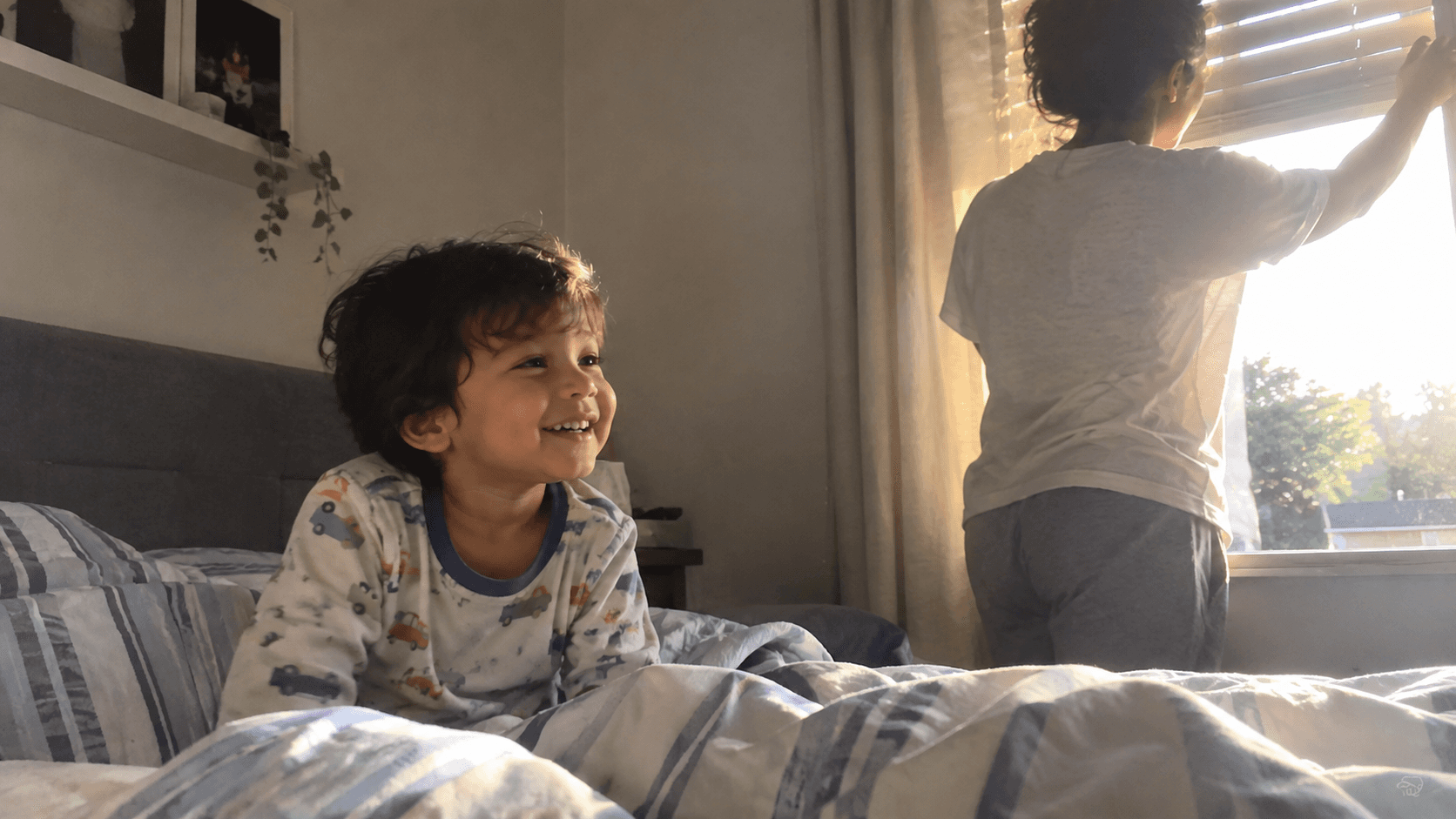
A consistent goodbye — a hug, a special phrase, a wave from the window — signals safety and gives the child a reliable anchor for that transition. Keep it short and confident. Lingering extends anxiety for both of you.
Toddlers and preschoolers respond well to "five minute warnings" before switching activities. A simple verbal cue ("After this show, we brush teeth") paired with a consistent follow-through builds trust and reduces resistance.
Ask "What happened first this morning at school?" rather than "How was your day?" Sequencing questions help children connect home and school experiences and reinforce the routine mentally.
Sleep is when the brain consolidates everything learned during the day. A child who gets adequate, consistent sleep will participate more fully in structured daycare routines — and manage transitions more smoothly.
At Little Einsteins Academy of Tampa, structured routines aren't an add-on — they're foundational to everything we do. Our teachers are trained to maintain consistent daily rhythms while staying flexible enough to follow a child's lead within that structure.
Every LEAO Classroom Features
We know that behind every well-adjusted child in a daycare classroom is a team that takes routine seriously. That's the commitment every LEAO family can count on.
Ready to see our daily schedules in action?
The best way to understand what a day at LEAO looks like is to come experience it yourself.
Daily schedules may vary slightly by classroom and are subject to change based on program needs, enrollment, and seasonal adjustments. Contact us for the most current schedule information.
Categories
Recent post