Touch supervision, every time
The AAP recommends staying within arm's reach of young children in or near any water, including bathtubs and small pools. Assign one adult as the dedicated 'water watcher' with no phones or distractions.


Outdoor Learning
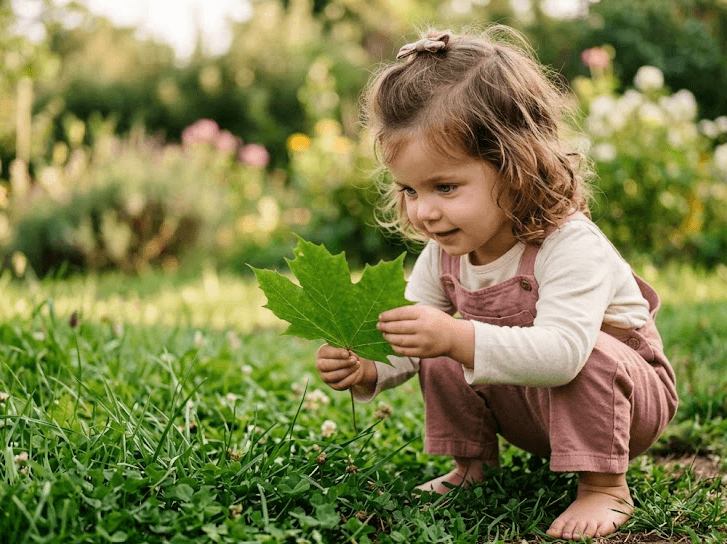
In a world where children are spending more time indoors — on screens, at desks, in structured indoor settings — access to wide open outdoor space is becoming one of the most valuable things a daycare can offer.
At Little Einsteins Academy of Tampa, outdoor play isn't a break from learning. It's one of the most important parts of the day. Our 2-acre campus gives children the physical space and natural environment they need to grow in ways that no classroom wall can contain.
Research on early childhood development consistently shows that regular outdoor play contributes to outcomes far beyond physical fitness. Children who spend time in natural, unstructured outdoor environments develop stronger problem-solving skills, better emotional regulation, richer vocabulary, and deeper social bonds than children who spend most of their day indoors.
Here's what happens when young children get real, daily outdoor time:
In a world where children are spending more time indoors — on screens, at desks, in structured indoor settings — access to wide open outdoor space is becoming one of the most valuable things a daycare can offer.
At Little Einsteins Academy of Tampa, outdoor play isn't a break from learning. It's one of the most important parts of the day. Our 2-acre campus gives children the physical space and natural environment they need to grow in ways that no classroom wall can contain.
Research on early childhood development consistently shows that regular outdoor play contributes to outcomes far beyond physical fitness. Children who spend time in natural, unstructured outdoor environments develop stronger problem-solving skills, better emotional regulation, richer vocabulary, and deeper social bonds than children who spend most of their day indoors.
Here's what happens when young children get real, daily outdoor time:
Two acres is not a small yard with a swing set. It's space for children to actually run
to move far enough from the starting point that they feel the freedom of distance. I
t's room for multiple activities to happen at the same time without crowding. It's
enough green space for gardens, nature paths, open field play, and structured outdoor equipment — all at once.
At LEAO, our campus is designed so that different types of children can find their version of outdoor play every single day:
Two acres is not a small yard with a swing set. It's space for children to actually run
to move far enough from the starting point that they feel the freedom of distance. I
t's room for multiple activities to happen at the same time without crowding. It's
enough green space for gardens, nature paths, open field play, and structured outdoor equipment — all at once.
At LEAO, our campus is designed so that different types of children can find their version of outdoor play every single day:
Two acres is not a small yard with a swing set. It's space for children to actually run
to move far enough from the starting point that they feel the freedom of distance. I
t's room for multiple activities to happen at the same time without crowding. It's
enough green space for gardens, nature paths, open field play, and structured outdoor equipment — all at once.
At LEAO, our campus is designed so that different types of children can find their version of outdoor play every single day:
Each layer covers a different kind of risk, and together they create a much stronger safety net than any one step alone. A locked gate doesn't remove the need for supervision, and swim lessons don't remove the need for a life jacket on a boat.
The AAP recommends staying within arm's reach of young children in or near any water, including bathtubs and small pools. Assign one adult as the dedicated 'water watcher' with no phones or distractions.
Four-sided pool fencing with a self-latching gate can prevent more than half of all swimming pool drownings among young children by removing unsupervised access during non-swim times.
Formal swim lessons can begin after a child's first birthday. Skills alone don't prevent drowning, but they add an important layer alongside supervision and barriers.
Coast Guard-approved life jackets are far more reliable than inflatable arm floaties or toys, especially around boats, lakes, and open water where conditions change quickly.
Keeping a phone poolside and having at least one caregiver trained in CPR can make a critical difference in the rare moments when the other layers aren't enough.
Each layer covers a different kind of risk, and together they create a much stronger safety net than any one step alone. A locked gate doesn't remove the need for supervision, and swim lessons don't remove the need for a life jacket on a boat.
The AAP recommends staying within arm's reach of young children in or near any water, including bathtubs and small pools. Assign one adult as the dedicated 'water watcher' with no phones or distractions.
Four-sided pool fencing with a self-latching gate can prevent more than half of all swimming pool drownings among young children by removing unsupervised access during non-swim times.
Formal swim lessons can begin after a child's first birthday. Skills alone don't prevent drowning, but they add an important layer alongside supervision and barriers.
Coast Guard-approved life jackets are far more reliable than inflatable arm floaties or toys, especially around boats, lakes, and open water where conditions change quickly.
Keeping a phone poolside and having at least one caregiver trained in CPR can make a critical difference in the rare moments when the other layers aren't enough.
Running, climbing, jumping, and balancing build gross motor skills, coordination, and body awareness — foundational for posture, focus, and even handwriting.
Outdoor environments are naturally unpredictable. Navigating uneven ground, moving a heavy rock, or watching an insect engages the brain in ways structured indoor activities can't replicate.
Open space and natural light reduce stress in children. Kids who play outside regularly tend to be calmer, less reactive, and better able to manage frustration.
Building something together, deciding rules for a made-up game, working through disagreements without a teacher intervening — outdoor play is where lasting social intelligence develops.
Children who regularly interact with the natural world develop curiosity, respect, and environmental awareness that stays with them for life.
Kids who want to run, climb, and push physical limits have the space and equipment to do exactly that — without being told to slow down or make room.
Children drawn to nature, bugs, plants, and textures have grass, soil, and natural elements to investigate up close with genuine curiosity.
Kids who want to construct, arrange, and create have outdoor areas where they can work with natural and open-ended materials without worrying about mess.
Children who learn through conversation and group play have enough space to form small groups, invent games, and work through the natural social dynamics that build real friendship skills.
In a world where children are spending more time indoors — on screens, at desks, in structured indoor settings — access to wide open outdoor space is becoming one of the most valuable things a daycare can offer.
At Little Einsteins Academy of Tampa, outdoor play isn't a break from learning. It's one of the most important parts of the day. Our 2-acre campus gives children the physical space and natural environment they need to grow in ways that no classroom wall can contain.
Research on early childhood development consistently shows that regular outdoor play contributes to outcomes far beyond physical fitness. Children who spend time in natural, unstructured outdoor environments develop stronger problem-solving skills, better emotional regulation, richer vocabulary, and deeper social bonds than children who spend most of their day indoors.
Here's what happens when young children get real, daily outdoor time:
No child has to be all of these things. The campus is big enough that every child can find their place in it — and that's exactly the point.
Our teachers don't watch outdoor play from a bench. They're present, engaged, and intentional. Each outdoor session has learning goals woven into it — whether it's a teacher-guided nature walk, an open-ended building challenge, or a group game designed to build cooperation.
At the same time, children are given real autonomy. They choose where to go, what to explore, and how to engage. The teacher's role is to observe, extend, and support — not to direct every moment.
This balance between structure and freedom is where the deepest learning happens.
Outdoor play at LEAO isn't squeezed in when the weather is perfect or when the schedule has a gap. It's a planned, protected part of every classroom's day — for every age group.
Infants go outside daily in strollers or on blankets in shaded, safe areas of the campus. Fresh air, natural light, and gentle sensory exposure to grass and outdoor sounds are foundational for infant development.
Toddlers have dedicated outdoor movement time built into their morning and afternoon schedules. This isn't just free run time — it includes guided sensory activities, nature exploration, and gross motor development games.
Preschoolers and VPK students spend extended time on the campus each day, with outdoor activities linked to current classroom themes. A classroom studying plants will explore the garden. A class learning about animals will observe and discuss what they find outdoors. Learning doesn't stop at the door.
No child has to be all of these things. The campus is big enough that every child can find their place in it — and that's exactly the point.
Our teachers don't watch outdoor play from a bench. They're present, engaged, and intentional. Each outdoor session has learning goals woven into it — whether it's a teacher-guided nature walk, an open-ended building challenge, or a group game designed to build cooperation.
At the same time, children are given real autonomy. They choose where to go, what to explore, and how to engage. The teacher's role is to observe, extend, and support — not to direct every moment.
This balance between structure and freedom is where the deepest learning happens.
Outdoor play at LEAO isn't squeezed in when the weather is perfect or when the schedule has a gap. It's a planned, protected part of every classroom's day — for every age group.
Infants go outside daily in strollers or on blankets in shaded, safe areas of the campus. Fresh air, natural light, and gentle sensory exposure to grass and outdoor sounds are foundational for infant development.
Toddlers have dedicated outdoor movement time built into their morning and afternoon schedules. This isn't just free run time — it includes guided sensory activities, nature exploration, and gross motor development games.
Preschoolers and VPK students spend extended time on the campus each day, with outdoor activities linked to current classroom themes. A classroom studying plants will explore the garden. A class learning about animals will observe and discuss what they find outdoors. Learning doesn't stop at the door.
No child has to be all of these things. The campus is big enough that every child can find their place in it — and that's exactly the point.
Our teachers don't watch outdoor play from a bench. They're present, engaged, and intentional. Each outdoor session has learning goals woven into it — whether it's a teacher-guided nature walk, an open-ended building challenge, or a group game designed to build cooperation.
At the same time, children are given real autonomy. They choose where to go, what to explore, and how to engage. The teacher's role is to observe, extend, and support — not to direct every moment.
This balance between structure and freedom is where the deepest learning happens.
Outdoor play at LEAO isn't squeezed in when the weather is perfect or when the schedule has a gap. It's a planned, protected part of every classroom's day — for every age group.
Infants go outside daily in strollers or on blankets in shaded, safe areas of the campus. Fresh air, natural light, and gentle sensory exposure to grass and outdoor sounds are foundational for infant development.
Toddlers have dedicated outdoor movement time built into their morning and afternoon schedules. This isn't just free run time — it includes guided sensory activities, nature exploration, and gross motor development games.
Preschoolers and VPK students spend extended time on the campus each day, with outdoor activities linked to current classroom themes. A classroom studying plants will explore the garden. A class learning about animals will observe and discuss what they find outdoors. Learning doesn't stop at the door.
When you're evaluating daycares in Tampa, it's easy to focus on indoor classrooms. But the outdoor environment is just as important — and far less standardized. At Little Einsteins Academy of Tampa, we're proud of what our campus offers every child, every day.
What Sets the LEAO Outdoor Experience Apart
Come see it for yourself.
No description does justice to what 2 acres of outdoor space looks and feels like when it's full of curious, active children.
Outdoor schedules may vary based on weather, safety conditions, and classroom needs. All outdoor areas are supervised at all times by trained LEAO staff.
Categories
Recent post


