Touch supervision, every time
The AAP recommends staying within arm's reach of young children in or near any water, including bathtubs and small pools. Assign one adult as the dedicated 'water watcher' with no phones or distractions.


Nutrition & Health Eating
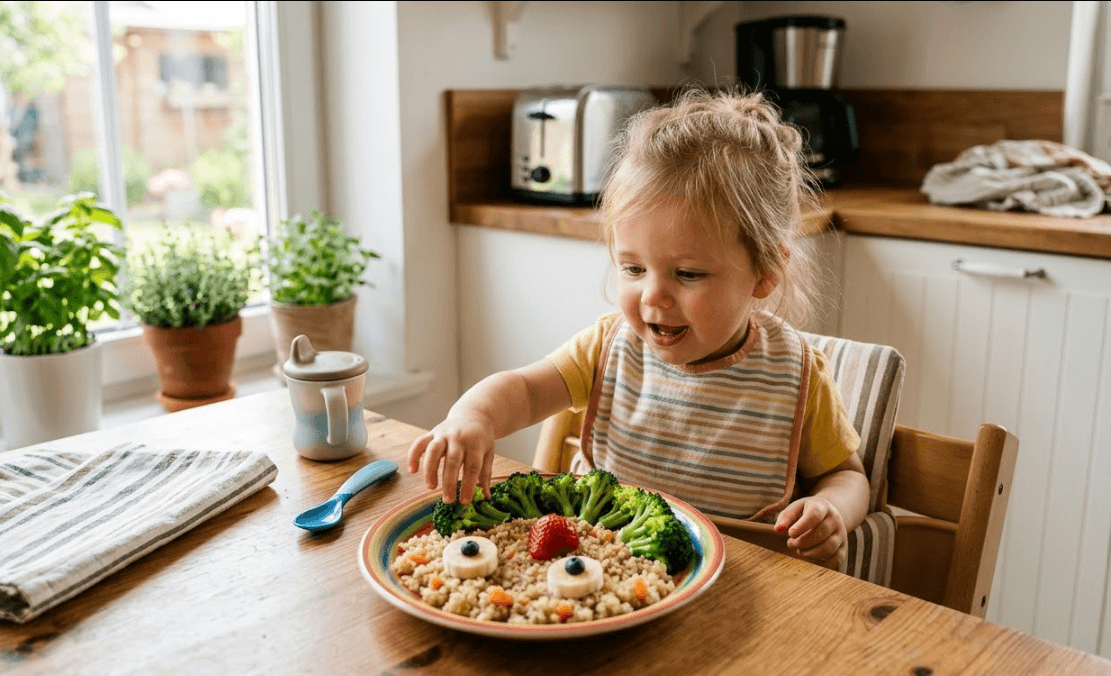
If your toddler refuses to eat anything that isn't bread, crackers, or plain pasta — you're not alone. Picky eating is one of the most common challenges parents of young children face, and it can be incredibly frustrating. You've made a balanced meal, your child takes one look at it, and pushes the plate away. Or worse — they loved carrots last week and now act like you've put something dangerous on their plate.
Here's the good news: picky eating is a completely normal phase of child development. Most children go through it between ages 1 and 5, and most come out the other side with a much broader palate. The key is how you respond during this phase — because the habits and attitudes you build around food now will shape your child's relationship with eating for years to come.
Understanding why your child is rejecting food can make the whole experience feel less personal and more manageable:
If your toddler refuses to eat anything that isn't bread, crackers, or plain pasta — you're not alone. Picky eating is one of the most common challenges parents of young children face, and it can be incredibly frustrating. You've made a balanced meal, your child takes one look at it, and pushes the plate away. Or worse — they loved carrots last week and now act like you've put something dangerous on their plate.
Here's the good news: picky eating is a completely normal phase of child development. Most children go through it between ages 1 and 5, and most come out the other side with a much broader palate. The key is how you respond during this phase — because the habits and attitudes you build around food now will shape your child's relationship with eating for years to come.
Understanding why your child is rejecting food can make the whole experience feel less personal and more manageable:
These aren't tricks or hacks — they're approaches rooted in how young children actually learn to accept new foods. They take patience and consistency, but they work.
These aren't tricks or hacks — they're approaches rooted in how young children actually learn to accept new foods. They take patience and consistency, but they work.
These aren't tricks or hacks — they're approaches rooted in how young children actually learn to accept new foods. They take patience and consistency, but they work.
Each layer covers a different kind of risk, and together they create a much stronger safety net than any one step alone. A locked gate doesn't remove the need for supervision, and swim lessons don't remove the need for a life jacket on a boat.
The AAP recommends staying within arm's reach of young children in or near any water, including bathtubs and small pools. Assign one adult as the dedicated 'water watcher' with no phones or distractions.
Four-sided pool fencing with a self-latching gate can prevent more than half of all swimming pool drownings among young children by removing unsupervised access during non-swim times.
Formal swim lessons can begin after a child's first birthday. Skills alone don't prevent drowning, but they add an important layer alongside supervision and barriers.
Coast Guard-approved life jackets are far more reliable than inflatable arm floaties or toys, especially around boats, lakes, and open water where conditions change quickly.
Keeping a phone poolside and having at least one caregiver trained in CPR can make a critical difference in the rare moments when the other layers aren't enough.
Each layer covers a different kind of risk, and together they create a much stronger safety net than any one step alone. A locked gate doesn't remove the need for supervision, and swim lessons don't remove the need for a life jacket on a boat.
The AAP recommends staying within arm's reach of young children in or near any water, including bathtubs and small pools. Assign one adult as the dedicated 'water watcher' with no phones or distractions.
Four-sided pool fencing with a self-latching gate can prevent more than half of all swimming pool drownings among young children by removing unsupervised access during non-swim times.
Formal swim lessons can begin after a child's first birthday. Skills alone don't prevent drowning, but they add an important layer alongside supervision and barriers.
Coast Guard-approved life jackets are far more reliable than inflatable arm floaties or toys, especially around boats, lakes, and open water where conditions change quickly.
Keeping a phone poolside and having at least one caregiver trained in CPR can make a critical difference in the rare moments when the other layers aren't enough.
Children are far more likely to taste something they had a hand in making. Even toddlers can wash vegetables, tear lettuce, stir a bowl, or sprinkle cheese. Start simple — let them pour pre-measured ingredients, press cookie cutters into sandwiches, or arrange fruit on a plate.
A face made of berries and banana slices. A "tree" of broccoli standing in hummus "soil." A sandwich cut into a star shape. Even small creative touches make food feel approachable. Once a child picks up a broccoli "tree" and bites the top off, they've tasted broccoli — and that's a win.
Never put a plate in front of your child where everything is unfamiliar. Always include at least one food you know they'll eat. The new food is just there — no requirement to try it. Research suggests children may need to see a food 10 to 15 times before they're willing to taste it.
Children learn eating behavior by watching you. If you're eating the same meal and visibly enjoying it, your child picks up on that. Avoid making a separate "kid meal" whenever possible. Serve the same food to everyone, in age-appropriate portions and cuts.
Instead of "eat your peas," try "do you want peas or carrots with your chicken tonight?" Giving children a sense of control over their food reduces resistance. Two or three choices is enough — you're still deciding what's available, but they feel empowered.
When your child spits out a food or says "yuck" — stay neutral. A big reaction turns mealtimes into a performance. Keep it calm: "That's okay, you don't have to eat it. It'll be here if you change your mind." Then move on. No drama, no negotiation.
Snack time is lower pressure than meals, making it the perfect time to introduce new foods. Put out a small plate with familiar items and one or two new ones. A few raisins, some cheese, and one new thing like a piece of mango or a thin strip of bell pepper. No commentary needed.
If your toddler refuses to eat anything that isn't bread, crackers, or plain pasta — you're not alone. Picky eating is one of the most common challenges parents of young children face, and it can be incredibly frustrating. You've made a balanced meal, your child takes one look at it, and pushes the plate away. Or worse — they loved carrots last week and now act like you've put something dangerous on their plate.
Here's the good news: picky eating is a completely normal phase of child development. Most children go through it between ages 1 and 5, and most come out the other side with a much broader palate. The key is how you respond during this phase — because the habits and attitudes you build around food now will shape your child's relationship with eating for years to come.
Understanding why your child is rejecting food can make the whole experience feel less personal and more manageable:
Just as important as what to do is what not to do. These common reactions can make picky eating worse or create unhealthy food relationships:
Just as important as what to do is what not to do. These common reactions can make picky eating worse or create unhealthy food relationships:
Just as important as what to do is what not to do. These common reactions can make picky eating worse or create unhealthy food relationships:
In most cases, no. Picky eating between ages 1 and 5 is a normal developmental phase. However, if your child is consistently losing weight, eating fewer than 10 foods total, gagging or vomiting regularly with new textures, or showing extreme distress around mealtimes, it's worth talking to your pediatrician.
It varies widely. Some children grow out of it by age 3 or 4. Others take longer. The most important thing is to keep offering variety without pressure. Children who are given repeated, no-pressure exposure to new foods tend to expand their palate over time.
It's okay as a short-term nutrition strategy, but it shouldn't be your only approach. Hiding vegetables doesn't teach your child to accept and enjoy those foods. Combine hidden-veggie recipes with visible, low-pressure exposure to whole vegetables on the plate.
Many toddlers go through phases where they fixate on a few foods. As long as they're growing well and have energy, it's usually fine short-term. Keep offering variety at every meal alongside their preferred foods. Talk to your pediatrician if you're concerned about nutrition.
Often, yes. Children tend to be more willing to try foods when they see other children eating them. The social environment of mealtimes at daycare can naturally expand your child's willingness to try new things.
Picky eating is a phase — not a life sentence. With patience, creativity, and consistency, your child will gradually learn to enjoy a wider range of foods. If you're looking for a childcare environment that supports healthy habits, we'd love to show you Little Einsteins Academy of Tampa.
Disclaimer: The tips in this article are general suggestions for parents dealing with typical picky eating in young children. If your child has persistent feeding difficulties, extreme food refusal, significant weight loss, or sensory issues around food, please consult your pediatrician or a pediatric feeding specialist. Little Einsteins Academy of Tampa is not a medical or nutritional provider.
Categories
Recent post