Touch supervision, every time
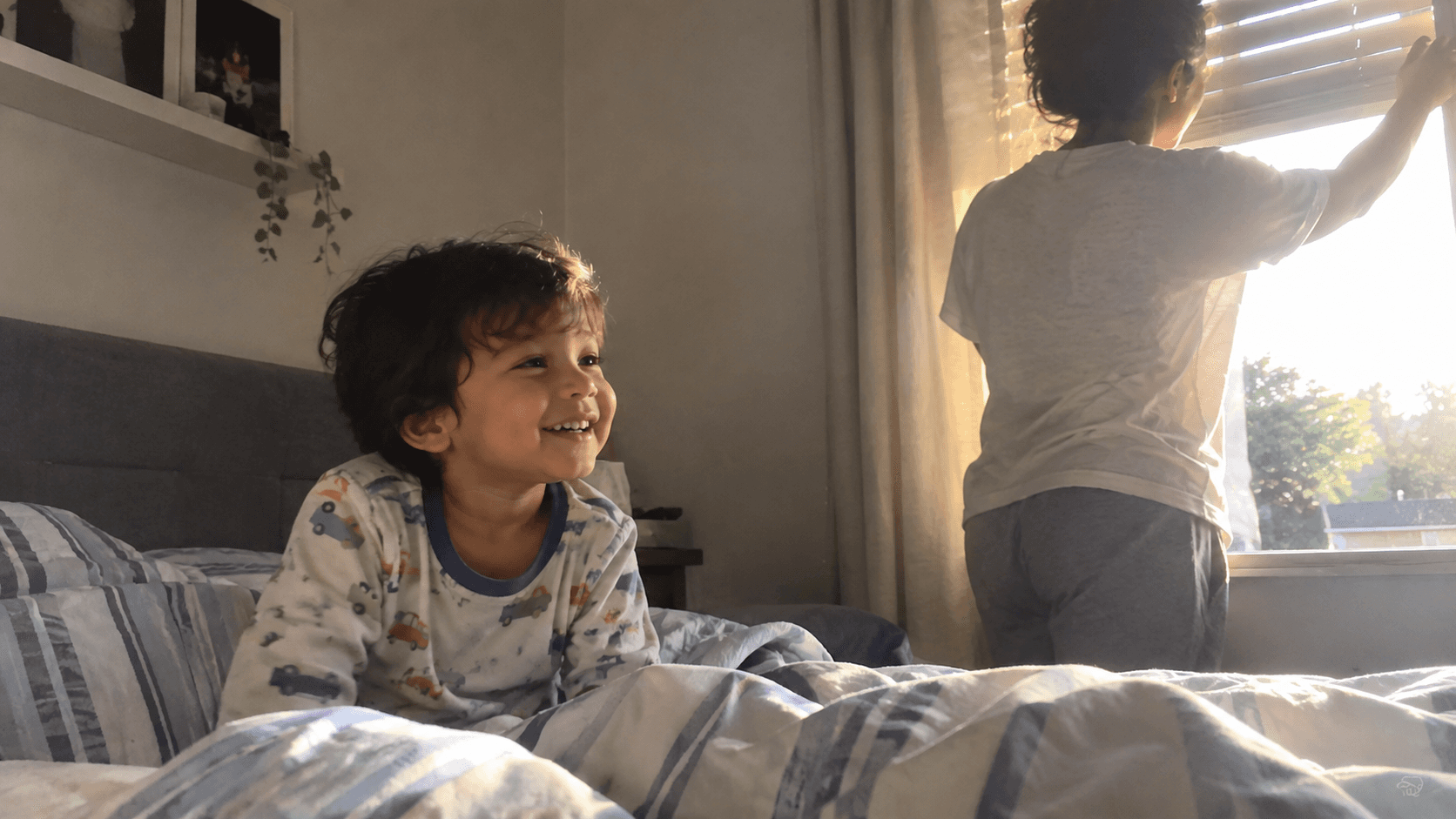
The AAP recommends staying within arm's reach of young children in or near any water, including bathtubs and small pools. Assign one adult as the dedicated 'water watcher' with no phones or distractions.


Social-Emotional Learning
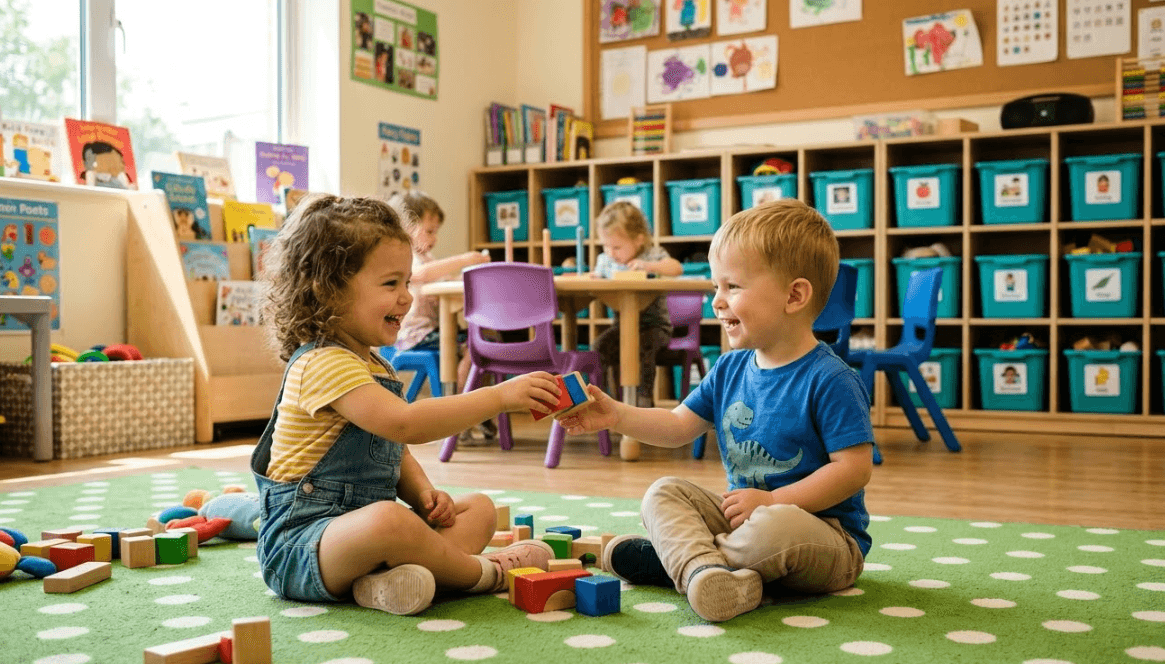
"Share!" It's probably one of the most-repeated words in any household with a toddler. Whether it's a toy at the park, a crayon at the table, or a snack in the car, parents spend a lot of energy trying to get their young children to share — and a lot of frustration when it doesn't work. But here's something worth knowing: toddlers aren't being selfish when they refuse to share. They're being toddlers.
Sharing is a complex social skill that requires empathy, impulse control, and an understanding of other people's feelings — abilities that are still developing in children under 3. The good news is that these skills can be nurtured, practiced, and strengthened. And one of the most effective places for that to happen is in a daycare environment, where children interact with peers daily in structured, guided settings.
Before you can teach sharing, it helps to understand why it's difficult:
"Share!" It's probably one of the most-repeated words in any household with a toddler. Whether it's a toy at the park, a crayon at the table, or a snack in the car, parents spend a lot of energy trying to get their young children to share — and a lot of frustration when it doesn't work. But here's something worth knowing: toddlers aren't being selfish when they refuse to share. They're being toddlers.
Sharing is a complex social skill that requires empathy, impulse control, and an understanding of other people's feelings — abilities that are still developing in children under 3. The good news is that these skills can be nurtured, practiced, and strengthened. And one of the most effective places for that to happen is in a daycare environment, where children interact with peers daily in structured, guided settings.
Before you can teach sharing, it helps to understand why it's difficult:
None of this means you should stop encouraging sharing. It means you should adjust your expectations and use strategies that work with your child's development, not against it.
Sharing is just one piece of a much bigger puzzle. When children spend time in a daycare setting with other kids their age, they naturally develop a whole range of social-emotional skills that are difficult to practice at home alone:
None of this means you should stop encouraging sharing. It means you should adjust your expectations and use strategies that work with your child's development, not against it.
Sharing is just one piece of a much bigger puzzle. When children spend time in a daycare setting with other kids their age, they naturally develop a whole range of social-emotional skills that are difficult to practice at home alone:
None of this means you should stop encouraging sharing. It means you should adjust your expectations and use strategies that work with your child's development, not against it.
Sharing is just one piece of a much bigger puzzle. When children spend time in a daycare setting with other kids their age, they naturally develop a whole range of social-emotional skills that are difficult to practice at home alone:
Each layer covers a different kind of risk, and together they create a much stronger safety net than any one step alone. A locked gate doesn't remove the need for supervision, and swim lessons don't remove the need for a life jacket on a boat.
The AAP recommends staying within arm's reach of young children in or near any water, including bathtubs and small pools. Assign one adult as the dedicated 'water watcher' with no phones or distractions.
Four-sided pool fencing with a self-latching gate can prevent more than half of all swimming pool drownings among young children by removing unsupervised access during non-swim times.
Formal swim lessons can begin after a child's first birthday. Skills alone don't prevent drowning, but they add an important layer alongside supervision and barriers.
Coast Guard-approved life jackets are far more reliable than inflatable arm floaties or toys, especially around boats, lakes, and open water where conditions change quickly.
Keeping a phone poolside and having at least one caregiver trained in CPR can make a critical difference in the rare moments when the other layers aren't enough.
Each layer covers a different kind of risk, and together they create a much stronger safety net than any one step alone. A locked gate doesn't remove the need for supervision, and swim lessons don't remove the need for a life jacket on a boat.
The AAP recommends staying within arm's reach of young children in or near any water, including bathtubs and small pools. Assign one adult as the dedicated 'water watcher' with no phones or distractions.
Four-sided pool fencing with a self-latching gate can prevent more than half of all swimming pool drownings among young children by removing unsupervised access during non-swim times.
Formal swim lessons can begin after a child's first birthday. Skills alone don't prevent drowning, but they add an important layer alongside supervision and barriers.
Coast Guard-approved life jackets are far more reliable than inflatable arm floaties or toys, especially around boats, lakes, and open water where conditions change quickly.
Keeping a phone poolside and having at least one caregiver trained in CPR can make a critical difference in the rare moments when the other layers aren't enough.
"Share!" It's probably one of the most-repeated words in any household with a toddler. Whether it's a toy at the park, a crayon at the table, or a snack in the car, parents spend a lot of energy trying to get their young children to share — and a lot of frustration when it doesn't work. But here's something worth knowing: toddlers aren't being selfish when they refuse to share. They're being toddlers.
Sharing is a complex social skill that requires empathy, impulse control, and an understanding of other people's feelings — abilities that are still developing in children under 3. The good news is that these skills can be nurtured, practiced, and strengthened. And one of the most effective places for that to happen is in a daycare environment, where children interact with peers daily in structured, guided settings.
Before you can teach sharing, it helps to understand why it's difficult:
At home, a child might interact with one or two siblings and their parents. At daycare, they interact with a dozen or more peers and multiple adults — every single day. This volume of social interaction is what makes daycare such a powerful environment for building social skills. Children learn by watching other children, imitating their behavior, and seeing the results. A child who sees a peer say "please" and receive a positive response is more likely to try the same approach. This peer modeling is something no amount of parent instruction can fully replicate.
At Little Einsteins Academy of Tampa, social-emotional development isn't an add-on — it's central to everything we do. Here's how our programs help children develop the social skills they need:
At home, a child might interact with one or two siblings and their parents. At daycare, they interact with a dozen or more peers and multiple adults — every single day. This volume of social interaction is what makes daycare such a powerful environment for building social skills. Children learn by watching other children, imitating their behavior, and seeing the results. A child who sees a peer say "please" and receive a positive response is more likely to try the same approach. This peer modeling is something no amount of parent instruction can fully replicate.
At Little Einsteins Academy of Tampa, social-emotional development isn't an add-on — it's central to everything we do. Here's how our programs help children develop the social skills they need:
At home, a child might interact with one or two siblings and their parents. At daycare, they interact with a dozen or more peers and multiple adults — every single day. This volume of social interaction is what makes daycare such a powerful environment for building social skills. Children learn by watching other children, imitating their behavior, and seeing the results. A child who sees a peer say "please" and receive a positive response is more likely to try the same approach. This peer modeling is something no amount of parent instruction can fully replicate.
At Little Einsteins Academy of Tampa, social-emotional development isn't an add-on — it's central to everything we do. Here's how our programs help children develop the social skills they need:
Most children begin to show genuine sharing behavior around age 3 to 4. Before that, you'll see parallel play (playing next to each other but not together) and early turn-taking with adult guidance. Don't worry if your 2-year-old isn't sharing willingly yet — it's completely developmentally appropriate.
No. Forced sharing teaches children that their belongings can be taken at any time, which can actually increase possessiveness. Instead, encourage turn-taking: "When you're done with the truck, it will be Sarah's turn." This respects your child's autonomy while teaching fairness.
This is very common. At daycare, sharing is part of the routine and reinforced by peers and teachers. At home, there's less social pressure and children feel more comfortable asserting themselves. Keep practicing at home with low-pressure strategies and know that the skills they're learning at daycare will carry over with time.
Play turn-taking games: roll a ball back and forth, take turns stacking blocks, or play simple board games. Use language like "my turn, your turn" to make the concept concrete. Praise the behavior when you see it: "You let your sister use the blue crayon — that was so kind."
No. It's healthy for children to have some things that are just theirs — a special stuffed animal, a security blanket. Teaching children that some things are personal and some things are for sharing is actually a more realistic social skill than expecting them to share everything all the time.
At Little Einsteins Academy of Tampa, we create the kind of warm, structured environment where children learn to share, cooperate, and build friendships naturally. Schedule a tour to see how our classrooms support social-emotional growth every day.
Disclaimer: The information in this article reflects general child development principles and the programs offered at Little Einsteins Academy of Tampa. Every child develops social skills at their own pace. If you have concerns about your child's social or emotional development, we encourage you to speak with your child's pediatrician or a child development specialist.
Categories
Recent post