Touch supervision, every time
The AAP recommends staying within arm's reach of young children in or near any water, including bathtubs and small pools. Assign one adult as the dedicated 'water watcher' with no phones or distractions.


Parenting Tips
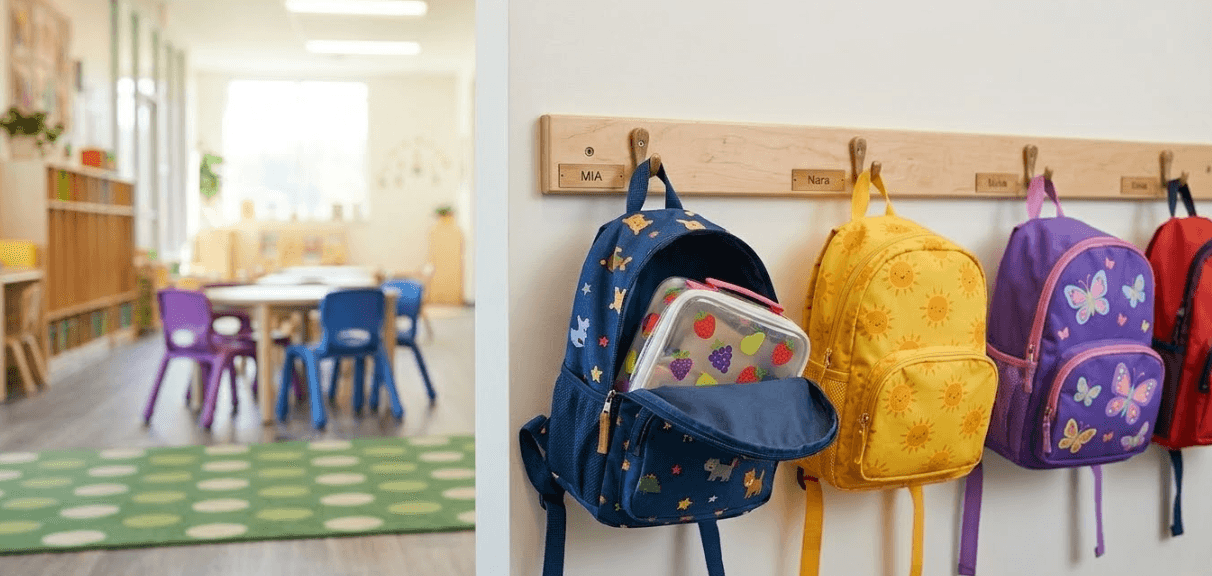
If mornings in your house feel like a race against the clock — shoes missing, breakfast half-eaten, and your toddler refusing to get in the car — you're not alone. For most families with young children, getting out the door for daycare drop-off is the hardest part of the day. But it doesn't have to be. With a few simple habits and a little preparation the night before, mornings can go from chaotic to calm.
This guide is packed with practical tips you can start using tomorrow — organized by what to do the night before, what to do the morning of, and specific advice based on your child's age.
The secret to a smooth morning isn't what happens at 7 AM — it's what you do the night before. Spending 15 minutes preparing after bedtime can save you 30 minutes of stress in the morning:
If mornings in your house feel like a race against the clock — shoes missing, breakfast half-eaten, and your toddler refusing to get in the car — you're not alone. For most families with young children, getting out the door for daycare drop-off is the hardest part of the day. But it doesn't have to be. With a few simple habits and a little preparation the night before, mornings can go from chaotic to calm.
This guide is packed with practical tips you can start using tomorrow — organized by what to do the night before, what to do the morning of, and specific advice based on your child's age.
The secret to a smooth morning isn't what happens at 7 AM — it's what you do the night before. Spending 15 minutes preparing after bedtime can save you 30 minutes of stress in the morning:
Even with great prep, mornings with young children require patience and flexibility. Here are strategies that consistently help families:
Wake up before your child — Even 15 minutes of quiet time to get dressed, drink coffee, and center yourself makes a huge difference in how you handle the morning
Follow the same routine every day — Wake up, bathroom, get dressed, eat breakfast, brush teeth, shoes on, out the door. Same order, every day. Children thrive on predictability
Use visual cues — A simple picture chart on the fridge showing the morning steps (get dressed → eat → brush teeth → shoes → car) helps children know what comes next without being told
Build in buffer time — Plan to leave 10 minutes earlier than you actually need to. This removes the pressure and gives you room for the inevitable delay
Keep the mood light — Play music, sing a silly song, or make a game out of getting ready. A stressed parent creates a stressed child. Your energy sets the tone
Limit screen time in the morning — It's tempting to turn on a show while you get ready, but screens make transitions harder. Children struggle to switch from passive watching to active cooperation
Even with great prep, mornings with young children require patience and flexibility. Here are strategies that consistently help families:
Wake up before your child — Even 15 minutes of quiet time to get dressed, drink coffee, and center yourself makes a huge difference in how you handle the morning
Follow the same routine every day — Wake up, bathroom, get dressed, eat breakfast, brush teeth, shoes on, out the door. Same order, every day. Children thrive on predictability
Use visual cues — A simple picture chart on the fridge showing the morning steps (get dressed → eat → brush teeth → shoes → car) helps children know what comes next without being told
Build in buffer time — Plan to leave 10 minutes earlier than you actually need to. This removes the pressure and gives you room for the inevitable delay
Keep the mood light — Play music, sing a silly song, or make a game out of getting ready. A stressed parent creates a stressed child. Your energy sets the tone
Limit screen time in the morning — It's tempting to turn on a show while you get ready, but screens make transitions harder. Children struggle to switch from passive watching to active cooperation
Even with great prep, mornings with young children require patience and flexibility. Here are strategies that consistently help families:
Wake up before your child — Even 15 minutes of quiet time to get dressed, drink coffee, and center yourself makes a huge difference in how you handle the morning
Follow the same routine every day — Wake up, bathroom, get dressed, eat breakfast, brush teeth, shoes on, out the door. Same order, every day. Children thrive on predictability
Use visual cues — A simple picture chart on the fridge showing the morning steps (get dressed → eat → brush teeth → shoes → car) helps children know what comes next without being told
Build in buffer time — Plan to leave 10 minutes earlier than you actually need to. This removes the pressure and gives you room for the inevitable delay
Keep the mood light — Play music, sing a silly song, or make a game out of getting ready. A stressed parent creates a stressed child. Your energy sets the tone
Limit screen time in the morning — It's tempting to turn on a show while you get ready, but screens make transitions harder. Children struggle to switch from passive watching to active cooperation
Each layer covers a different kind of risk, and together they create a much stronger safety net than any one step alone. A locked gate doesn't remove the need for supervision, and swim lessons don't remove the need for a life jacket on a boat.
The AAP recommends staying within arm's reach of young children in or near any water, including bathtubs and small pools. Assign one adult as the dedicated 'water watcher' with no phones or distractions.
Four-sided pool fencing with a self-latching gate can prevent more than half of all swimming pool drownings among young children by removing unsupervised access during non-swim times.
Formal swim lessons can begin after a child's first birthday. Skills alone don't prevent drowning, but they add an important layer alongside supervision and barriers.
Coast Guard-approved life jackets are far more reliable than inflatable arm floaties or toys, especially around boats, lakes, and open water where conditions change quickly.
Keeping a phone poolside and having at least one caregiver trained in CPR can make a critical difference in the rare moments when the other layers aren't enough.
Each layer covers a different kind of risk, and together they create a much stronger safety net than any one step alone. A locked gate doesn't remove the need for supervision, and swim lessons don't remove the need for a life jacket on a boat.
The AAP recommends staying within arm's reach of young children in or near any water, including bathtubs and small pools. Assign one adult as the dedicated 'water watcher' with no phones or distractions.
Four-sided pool fencing with a self-latching gate can prevent more than half of all swimming pool drownings among young children by removing unsupervised access during non-swim times.
Formal swim lessons can begin after a child's first birthday. Skills alone don't prevent drowning, but they add an important layer alongside supervision and barriers.
Coast Guard-approved life jackets are far more reliable than inflatable arm floaties or toys, especially around boats, lakes, and open water where conditions change quickly.
Keeping a phone poolside and having at least one caregiver trained in CPR can make a critical difference in the rare moments when the other layers aren't enough.
👶 Infants (0–12 months)
Dropping off a baby can feel emotionally heavy — especially in the early weeks. Remember that your baby is in good hands, and these tips will help make the handoff smoother for both of you:
If mornings in your house feel like a race against the clock — shoes missing, breakfast half-eaten, and your toddler refusing to get in the car — you're not alone. For most families with young children, getting out the door for daycare drop-off is the hardest part of the day. But it doesn't have to be. With a few simple habits and a little preparation the night before, mornings can go from chaotic to calm.
This guide is packed with practical tips you can start using tomorrow — organized by what to do the night before, what to do the morning of, and specific advice based on your child's age.
The secret to a smooth morning isn't what happens at 7 AM — it's what you do the night before. Spending 15 minutes preparing after bedtime can save you 30 minutes of stress in the morning:
At Little Einsteins Academy of Tampa, we know that drop-off is a big moment for both parents and children. That's why we've built our morning routine to make the transition as smooth as possible:
At Little Einsteins Academy of Tampa, we know that drop-off is a big moment for both parents and children. That's why we've built our morning routine to make the transition as smooth as possible:
At Little Einsteins Academy of Tampa, we know that drop-off is a big moment for both parents and children. That's why we've built our morning routine to make the transition as smooth as possible:
At Little Einsteins Academy of Tampa, we know that drop-off is a big moment for both parents and children. That's why we've built our morning routine to make the transition as smooth as possible:
At Little Einsteins Academy of Tampa, we know that drop-off is a big moment for both parents and children. That's why we've built our morning routine to make the transition as smooth as possible:
At Little Einsteins Academy of Tampa, we know that drop-off is a big moment for both parents and children. That's why we've built our morning routine to make the transition as smooth as possible:
Yes, especially for children between 8 months and 3 years old. Crying at drop-off doesn't mean your child is unhappy at daycare — it means they love you and the transition is hard. In most cases, children calm down within a few minutes. If the crying persists throughout the day, talk to your child's teacher about strategies.
Generally, no. Lingering tends to extend the distress for both of you. A short, loving, confident goodbye is usually the most effective approach. Trust the teachers to help your child through the transition.
Every child is different, but most children settle into a comfortable routine within 2–4 weeks. Some adjust in days, others take a bit longer. Consistency is the key — the more predictable the routine, the faster the adjustment.
This is common after weekends, vacations, illnesses, or changes at home. It doesn't mean something is wrong — it just means your child needs a little extra reassurance. Stick with your routine and it will pass.
Absolutely. At Little Einsteins Academy, we encourage parents to call or message anytime. We're also happy to send photos during the day so you can see your child engaged and happy.
At Little Einsteins Academy of Tampa, smooth mornings start with a team that truly cares. Schedule a tour to meet our teachers, see our welcoming campus, and learn how we help families — and children — feel confident from the very first drop-off.
Disclaimer: The tips in this article are general suggestions based on common experiences among families with young children. Every child is different. If your child experiences persistent distress at drop-off or significant changes in behavior, we encourage you to speak with your child's pediatrician or a child development specialist.
Categories
Recent post