Touch supervision, every time
The AAP recommends staying within arm's reach of young children in or near any water, including bathtubs and small pools. Assign one adult as the dedicated 'water watcher' with no phones or distractions.


Parenting Tips
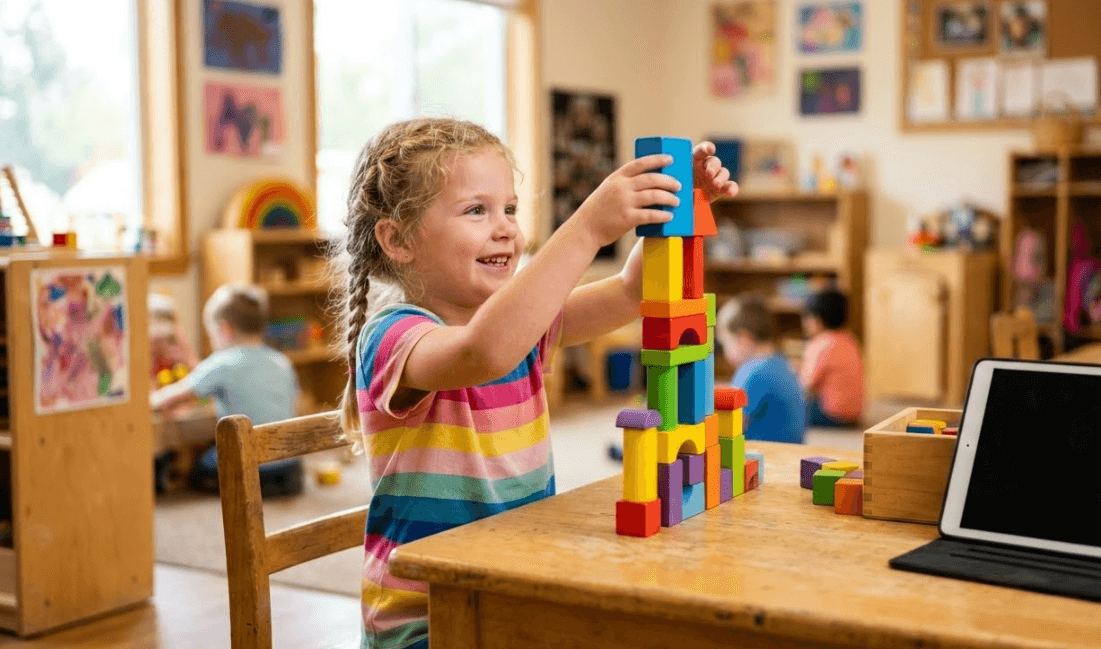
Screens are part of modern life — there's no getting around it. From educational apps to video calls with grandparents, digital devices play a role in most families. But for parents of young children, the question isn't whether screens exist — it's how much is too much, and what should fill the rest of your child's day.
The good news is that finding a healthy balance doesn't mean banning screens entirely. It means being intentional about when, how, and how much your child uses them — and making sure that active, hands-on play remains the center of their daily experience.
The American Academy of Pediatrics (AAP) provides clear guidelines to help parents navigate screen time at every stage of early childhood. Their most recent guidance emphasizes quality, context, and co-viewing over strict time limits alone:
Screens are part of modern life — there's no getting around it. From educational apps to video calls with grandparents, digital devices play a role in most families. But for parents of young children, the question isn't whether screens exist — it's how much is too much, and what should fill the rest of your child's day.
The good news is that finding a healthy balance doesn't mean banning screens entirely. It means being intentional about when, how, and how much your child uses them — and making sure that active, hands-on play remains the center of their daily experience.
The American Academy of Pediatrics (AAP) provides clear guidelines to help parents navigate screen time at every stage of early childhood. Their most recent guidance emphasizes quality, context, and co-viewing over strict time limits alone:
These guidelines aren't about perfection. They're about creating habits that protect your child's development while acknowledging that screens are a reality of daily life.
Even the best educational app can't replace what a child gets from real, hands-on play. When your child builds a tower out of blocks, they're learning physics, patience, and problem-solving in a way no screen can simulate. When they run outside, climb, and dig in the dirt, they're developing gross motor skills, sensory awareness, and confidence. When they play pretend with other children, they're building empathy, negotiation skills, and emotional regulation.
Screens are passive by nature — even interactive ones. A child tapping a screen is making choices within a system someone else designed. A child playing freely is creating their own systems, making their own rules, and navigating real-world consequences. That difference matters enormously for brain development in the first five years of life.
Replacing screen time doesn't have to be complicated. Here are simple, practical activities that you can do with your child at home — no special supplies needed:
These guidelines aren't about perfection. They're about creating habits that protect your child's development while acknowledging that screens are a reality of daily life.
Even the best educational app can't replace what a child gets from real, hands-on play. When your child builds a tower out of blocks, they're learning physics, patience, and problem-solving in a way no screen can simulate. When they run outside, climb, and dig in the dirt, they're developing gross motor skills, sensory awareness, and confidence. When they play pretend with other children, they're building empathy, negotiation skills, and emotional regulation.
Screens are passive by nature — even interactive ones. A child tapping a screen is making choices within a system someone else designed. A child playing freely is creating their own systems, making their own rules, and navigating real-world consequences. That difference matters enormously for brain development in the first five years of life.
Replacing screen time doesn't have to be complicated. Here are simple, practical activities that you can do with your child at home — no special supplies needed:
These guidelines aren't about perfection. They're about creating habits that protect your child's development while acknowledging that screens are a reality of daily life.
Even the best educational app can't replace what a child gets from real, hands-on play. When your child builds a tower out of blocks, they're learning physics, patience, and problem-solving in a way no screen can simulate. When they run outside, climb, and dig in the dirt, they're developing gross motor skills, sensory awareness, and confidence. When they play pretend with other children, they're building empathy, negotiation skills, and emotional regulation.
Screens are passive by nature — even interactive ones. A child tapping a screen is making choices within a system someone else designed. A child playing freely is creating their own systems, making their own rules, and navigating real-world consequences. That difference matters enormously for brain development in the first five years of life.
Replacing screen time doesn't have to be complicated. Here are simple, practical activities that you can do with your child at home — no special supplies needed:
Each layer covers a different kind of risk, and together they create a much stronger safety net than any one step alone. A locked gate doesn't remove the need for supervision, and swim lessons don't remove the need for a life jacket on a boat.
The AAP recommends staying within arm's reach of young children in or near any water, including bathtubs and small pools. Assign one adult as the dedicated 'water watcher' with no phones or distractions.
Four-sided pool fencing with a self-latching gate can prevent more than half of all swimming pool drownings among young children by removing unsupervised access during non-swim times.
Formal swim lessons can begin after a child's first birthday. Skills alone don't prevent drowning, but they add an important layer alongside supervision and barriers.
Coast Guard-approved life jackets are far more reliable than inflatable arm floaties or toys, especially around boats, lakes, and open water where conditions change quickly.
Keeping a phone poolside and having at least one caregiver trained in CPR can make a critical difference in the rare moments when the other layers aren't enough.
Each layer covers a different kind of risk, and together they create a much stronger safety net than any one step alone. A locked gate doesn't remove the need for supervision, and swim lessons don't remove the need for a life jacket on a boat.
The AAP recommends staying within arm's reach of young children in or near any water, including bathtubs and small pools. Assign one adult as the dedicated 'water watcher' with no phones or distractions.
Four-sided pool fencing with a self-latching gate can prevent more than half of all swimming pool drownings among young children by removing unsupervised access during non-swim times.
Formal swim lessons can begin after a child's first birthday. Skills alone don't prevent drowning, but they add an important layer alongside supervision and barriers.
Coast Guard-approved life jackets are far more reliable than inflatable arm floaties or toys, especially around boats, lakes, and open water where conditions change quickly.
Keeping a phone poolside and having at least one caregiver trained in CPR can make a critical difference in the rare moments when the other layers aren't enough.
Screens are part of modern life — there's no getting around it. From educational apps to video calls with grandparents, digital devices play a role in most families. But for parents of young children, the question isn't whether screens exist — it's how much is too much, and what should fill the rest of your child's day.
The good news is that finding a healthy balance doesn't mean banning screens entirely. It means being intentional about when, how, and how much your child uses them — and making sure that active, hands-on play remains the center of their daily experience.
The American Academy of Pediatrics (AAP) provides clear guidelines to help parents navigate screen time at every stage of early childhood. Their most recent guidance emphasizes quality, context, and co-viewing over strict time limits alone:
The goal isn't to eliminate screens — it's to make sure your child's day is rich with the kind of play that builds real skills and real connections.
At Little Einsteins Academy of Tampa, we believe that the best learning happens when children are actively engaged with their environment — not passively watching a screen. Our entire approach is built around real, hands-on, play-based experiences
The goal isn't to eliminate screens — it's to make sure your child's day is rich with the kind of play that builds real skills and real connections.
At Little Einsteins Academy of Tampa, we believe that the best learning happens when children are actively engaged with their environment — not passively watching a screen. Our entire approach is built around real, hands-on, play-based experiences
The goal isn't to eliminate screens — it's to make sure your child's day is rich with the kind of play that builds real skills and real connections.
At Little Einsteins Academy of Tampa, we believe that the best learning happens when children are actively engaged with their environment — not passively watching a screen. Our entire approach is built around real, hands-on, play-based experiences
No. The AAP recognizes that high-quality educational content, especially when watched together with a parent, can support learning. The key is choosing quality content, limiting the amount, and making sure screens don't replace active play, sleep, or family time.
Educational shows can introduce concepts, but children learn best through hands-on practice. Watching a show about counting is helpful, but actually counting real objects, sorting them by size, and grouping them by color builds a much deeper understanding.
Gradually. Start by replacing one screen session with a hands-on activity your child enjoys. Give choices: "Do you want to paint or play outside?" Over time, children naturally gravitate toward activities that are more engaging than a screen.
Our classroom philosophy centers on real-world, hands-on learning. We prioritize physical materials, outdoor play, creative activities, and teacher-led discovery over screen-based tools.
That's a reality for many families, and it's okay. Choose the best content you can, set a timer, and when screen time is over, offer a transition activity like coloring or playing with toys. Balance is the goal, not perfection.
If you're looking for a daycare that puts real play, creativity, and active learning first, we'd love to show you what we do. Schedule a tour of Little Einsteins Academy of Tampa, walk our 2-acre campus, and see how our hands-on approach helps children grow.
Disclaimer: The screen time guidelines referenced in this article are based on recommendations from the American Academy of Pediatrics (AAP) as of 2026. Individual needs may vary. For personalized guidance on your child's screen use and development, consult your pediatrician.
Categories
Recent post


