Touch supervision, every time
The AAP recommends staying within arm's reach of young children in or near any water, including bathtubs and small pools. Assign one adult as the dedicated 'water watcher' with no phones or distractions.


Early Learning
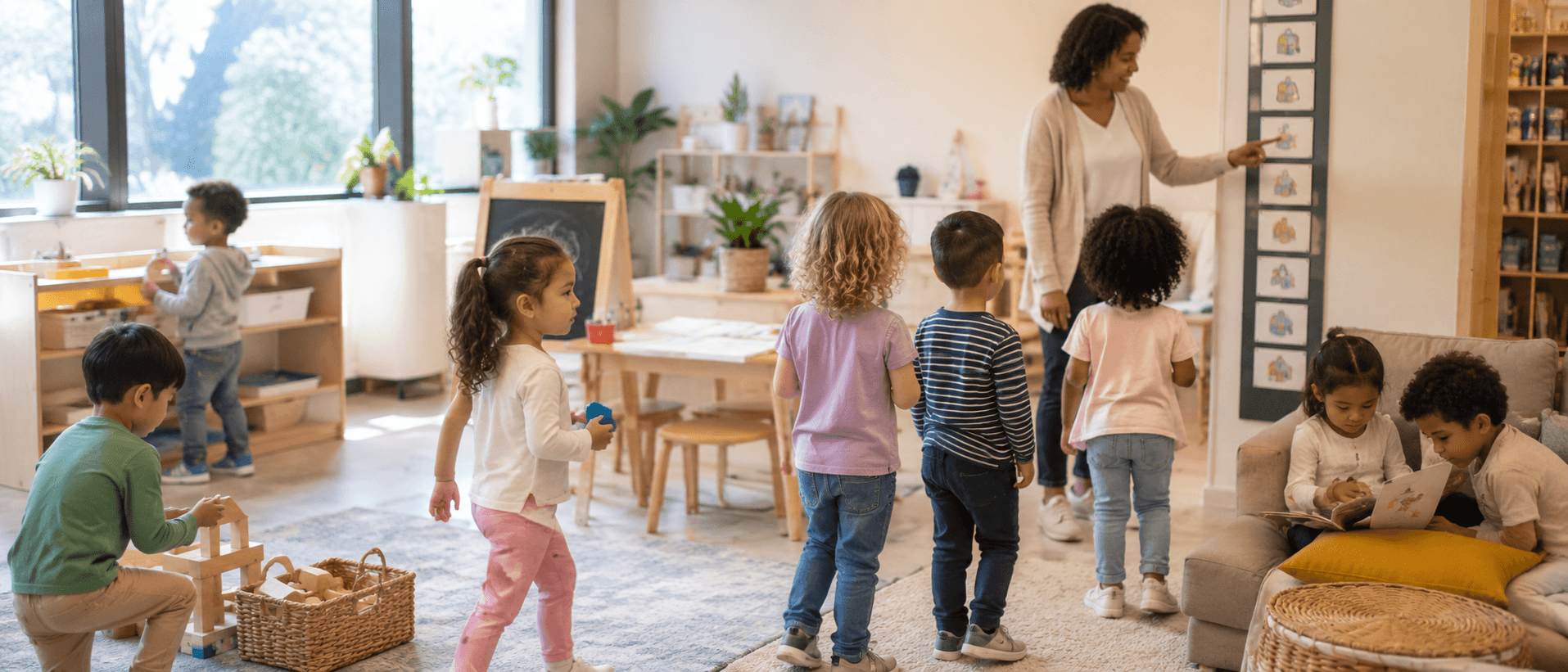
In an early childhood classroom, transitions happen all day long. Children move from arrival to breakfast, from centers to clean-up, from outdoor play to lunch, and from one classroom activity to another. Head Start explains that children experience many transitions, including moving from home to an early care setting, between activities, between age groups, and later from preschool to kindergarten.
These moments may seem small to adults, but they matter a great deal to young children. Head Start guidance on supporting transitions explains that three keys to successful transitions are caring relationships, consistent routines, and flexibility that meets the needs of each child. NAEYC also recognizes routines and transitions as a major topic in early childhood practice because they can be especially challenging for young children.
In an early childhood classroom, transitions happen all day long. Children move from arrival to breakfast, from centers to clean-up, from outdoor play to lunch, and from one classroom activity to another. Head Start explains that children experience many transitions, including moving from home to an early care setting, between activities, between age groups, and later from preschool to kindergarten.
These moments may seem small to adults, but they matter a great deal to young children. Head Start guidance on supporting transitions explains that three keys to successful transitions are caring relationships, consistent routines, and flexibility that meets the needs of each child. NAEYC also recognizes routines and transitions as a major topic in early childhood practice because they can be especially challenging for young children.
When transitions go well, children feel more secure and ready to learn. Predictable routines help children know what comes next, lower stress, and build independence over time. Resources for preschool classrooms also recommend tools such as visual schedules, music cues, transition objects, and simple first/then language to make these changes clearer and calmer.
A strong daycare or preschool classroom does not treat transitions as “in-between” time that does not matter. Instead, teachers plan for them intentionally. Head Start recommends previewing the day, using pictures or symbols for activities, adding music to routines, praising children when things go well, and staying flexible based on individual needs.
Classroom routines are most effective when they are predictable without being rigid. Guidance for educators notes that visual schedules, countdowns, timers, songs, movement activities, and small transition rituals can reduce anxiety and help children shift attention from one task to the next. Practical preschool transition ideas also emphasize reconnecting as a classroom community through songs, breathing, reflection, or short games during longer transitions.
When transitions go well, children feel more secure and ready to learn. Predictable routines help children know what comes next, lower stress, and build independence over time. Resources for preschool classrooms also recommend tools such as visual schedules, music cues, transition objects, and simple first/then language to make these changes clearer and calmer.
A strong daycare or preschool classroom does not treat transitions as “in-between” time that does not matter. Instead, teachers plan for them intentionally. Head Start recommends previewing the day, using pictures or symbols for activities, adding music to routines, praising children when things go well, and staying flexible based on individual needs.
Classroom routines are most effective when they are predictable without being rigid. Guidance for educators notes that visual schedules, countdowns, timers, songs, movement activities, and small transition rituals can reduce anxiety and help children shift attention from one task to the next. Practical preschool transition ideas also emphasize reconnecting as a classroom community through songs, breathing, reflection, or short games during longer transitions.
When transitions go well, children feel more secure and ready to learn. Predictable routines help children know what comes next, lower stress, and build independence over time. Resources for preschool classrooms also recommend tools such as visual schedules, music cues, transition objects, and simple first/then language to make these changes clearer and calmer.
A strong daycare or preschool classroom does not treat transitions as “in-between” time that does not matter. Instead, teachers plan for them intentionally. Head Start recommends previewing the day, using pictures or symbols for activities, adding music to routines, praising children when things go well, and staying flexible based on individual needs.
Classroom routines are most effective when they are predictable without being rigid. Guidance for educators notes that visual schedules, countdowns, timers, songs, movement activities, and small transition rituals can reduce anxiety and help children shift attention from one task to the next. Practical preschool transition ideas also emphasize reconnecting as a classroom community through songs, breathing, reflection, or short games during longer transitions.
Each layer covers a different kind of risk, and together they create a much stronger safety net than any one step alone. A locked gate doesn't remove the need for supervision, and swim lessons don't remove the need for a life jacket on a boat.
The AAP recommends staying within arm's reach of young children in or near any water, including bathtubs and small pools. Assign one adult as the dedicated 'water watcher' with no phones or distractions.
Four-sided pool fencing with a self-latching gate can prevent more than half of all swimming pool drownings among young children by removing unsupervised access during non-swim times.
Formal swim lessons can begin after a child's first birthday. Skills alone don't prevent drowning, but they add an important layer alongside supervision and barriers.
Coast Guard-approved life jackets are far more reliable than inflatable arm floaties or toys, especially around boats, lakes, and open water where conditions change quickly.
Keeping a phone poolside and having at least one caregiver trained in CPR can make a critical difference in the rare moments when the other layers aren't enough.
Each layer covers a different kind of risk, and together they create a much stronger safety net than any one step alone. A locked gate doesn't remove the need for supervision, and swim lessons don't remove the need for a life jacket on a boat.
The AAP recommends staying within arm's reach of young children in or near any water, including bathtubs and small pools. Assign one adult as the dedicated 'water watcher' with no phones or distractions.
Four-sided pool fencing with a self-latching gate can prevent more than half of all swimming pool drownings among young children by removing unsupervised access during non-swim times.
Formal swim lessons can begin after a child's first birthday. Skills alone don't prevent drowning, but they add an important layer alongside supervision and barriers.
Coast Guard-approved life jackets are far more reliable than inflatable arm floaties or toys, especially around boats, lakes, and open water where conditions change quickly.
Keeping a phone poolside and having at least one caregiver trained in CPR can make a critical difference in the rare moments when the other layers aren't enough.
In an early childhood classroom, transitions happen all day long. Children move from arrival to breakfast, from centers to clean-up, from outdoor play to lunch, and from one classroom activity to another. Head Start explains that children experience many transitions, including moving from home to an early care setting, between activities, between age groups, and later from preschool to kindergarten.
These moments may seem small to adults, but they matter a great deal to young children. Head Start guidance on supporting transitions explains that three keys to successful transitions are caring relationships, consistent routines, and flexibility that meets the needs of each child. NAEYC also recognizes routines and transitions as a major topic in early childhood practice because they can be especially challenging for young children.
This matters because transitions are tied to more than behavior. They connect with emotional regulation, attention, cooperation, and classroom participation. When children are supported through transitions with warmth and consistency, they often have an easier time engaging in the next activity and managing their feelings during change.
Parents sometimes worry when a child struggles with transitions, but that is not unusual in early childhood. Changes can feel hard when a child is tired, deeply focused on play, unsure what comes next, or still developing emotional regulation. Guidance for families emphasizes maintaining predictability where possible, making transitions clear and developmentally appropriate, and giving children ways to express their feelings and questions.
It also helps to remember that children do not all respond the same way. Some need a visual reminder, some benefit from a song or movement cue, and some need extra time and reassurance. Head Start specifically recommends flexibility that meets the needs of each child rather than assuming one transition strategy works for everyone.
This matters because transitions are tied to more than behavior. They connect with emotional regulation, attention, cooperation, and classroom participation. When children are supported through transitions with warmth and consistency, they often have an easier time engaging in the next activity and managing their feelings during change.
Parents sometimes worry when a child struggles with transitions, but that is not unusual in early childhood. Changes can feel hard when a child is tired, deeply focused on play, unsure what comes next, or still developing emotional regulation. Guidance for families emphasizes maintaining predictability where possible, making transitions clear and developmentally appropriate, and giving children ways to express their feelings and questions.
It also helps to remember that children do not all respond the same way. Some need a visual reminder, some benefit from a song or movement cue, and some need extra time and reassurance. Head Start specifically recommends flexibility that meets the needs of each child rather than assuming one transition strategy works for everyone.
This matters because transitions are tied to more than behavior. They connect with emotional regulation, attention, cooperation, and classroom participation. When children are supported through transitions with warmth and consistency, they often have an easier time engaging in the next activity and managing their feelings during change.
Parents sometimes worry when a child struggles with transitions, but that is not unusual in early childhood. Changes can feel hard when a child is tired, deeply focused on play, unsure what comes next, or still developing emotional regulation. Guidance for families emphasizes maintaining predictability where possible, making transitions clear and developmentally appropriate, and giving children ways to express their feelings and questions.
It also helps to remember that children do not all respond the same way. Some need a visual reminder, some benefit from a song or movement cue, and some need extra time and reassurance. Head Start specifically recommends flexibility that meets the needs of each child rather than assuming one transition strategy works for everyone.
If a child is having persistent, intense difficulty with everyday transitions across settings, families can talk with teachers and the pediatrician to better understand what support may help. Collaboration between home and school often makes routines more consistent and easier for children to understand.
A nurturing early learning environment should help children feel safe during both big changes and everyday classroom shifts. At Little Einsteins Academy of Tampa, families can explore programs that combine caring relationships, predictable routines, and age-appropriate support so children can move through the day with confidence.
If a child is having persistent, intense difficulty with everyday transitions across settings, families can talk with teachers and the pediatrician to better understand what support may help. Collaboration between home and school often makes routines more consistent and easier for children to understand.
A nurturing early learning environment should help children feel safe during both big changes and everyday classroom shifts. At Little Einsteins Academy of Tampa, families can explore programs that combine caring relationships, predictable routines, and age-appropriate support so children can move through the day with confidence.
If a child is having persistent, intense difficulty with everyday transitions across settings, families can talk with teachers and the pediatrician to better understand what support may help. Collaboration between home and school often makes routines more consistent and easier for children to understand.
A nurturing early learning environment should help children feel safe during both big changes and everyday classroom shifts. At Little Einsteins Academy of Tampa, families can explore programs that combine caring relationships, predictable routines, and age-appropriate support so children can move through the day with confidence.
Categories
Recent post