Touch supervision, every time
The AAP recommends staying within arm's reach of young children in or near any water, including bathtubs and small pools. Assign one adult as the dedicated 'water watcher' with no phones or distractions.


Language & Literacy
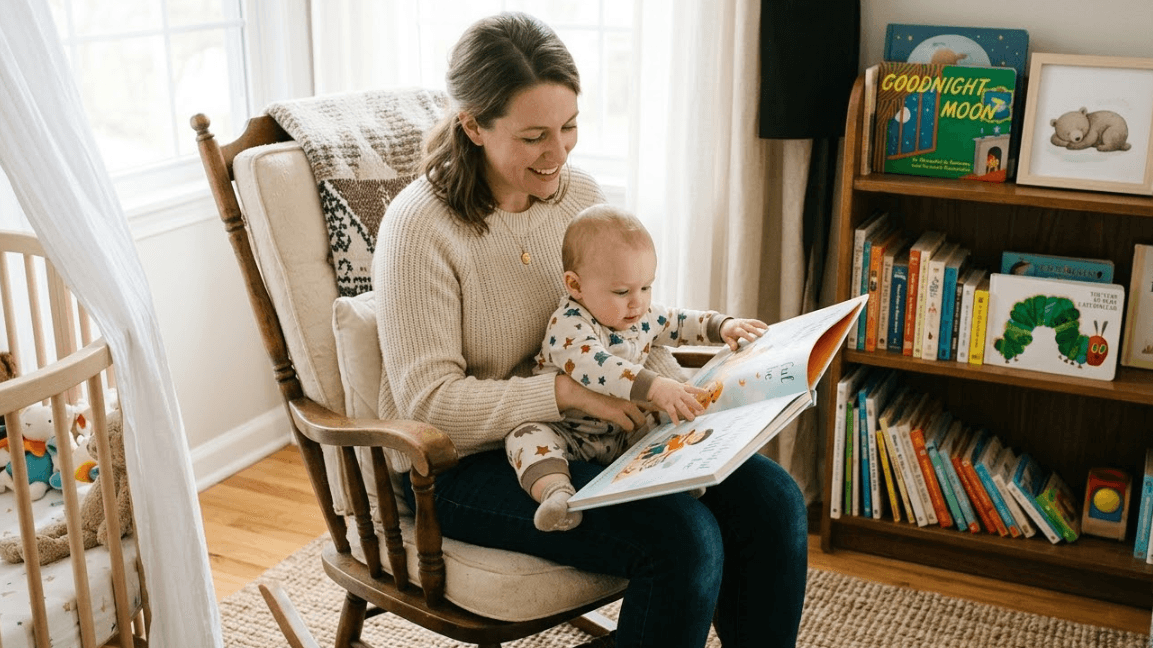
You don't need to wait until your child can talk, sit up, or even hold a book to start reading to them. In fact, the earlier you start, the better. Reading aloud to your baby — even in the very first weeks of life — is one of the single most impactful things you can do to support their brain development, language growth, and future success in school.
It doesn't matter if your newborn doesn't understand the words. What matters is the sound of your voice, the rhythm of language, the closeness of being held, and the patterns your baby's brain is absorbing every time you turn a page. This guide explains why early reading matters so much and how to make it a natural part of your daily routine — at every age.
A child's brain develops faster in the first three years of life than at any other time. During this period, the brain forms over one million new neural connections every second. The experiences a baby has during these years — including hearing language — literally shape the architecture of their brain. Here's what reading does:
You don't need to wait until your child can talk, sit up, or even hold a book to start reading to them. In fact, the earlier you start, the better. Reading aloud to your baby — even in the very first weeks of life — is one of the single most impactful things you can do to support their brain development, language growth, and future success in school.
It doesn't matter if your newborn doesn't understand the words. What matters is the sound of your voice, the rhythm of language, the closeness of being held, and the patterns your baby's brain is absorbing every time you turn a page. This guide explains why early reading matters so much and how to make it a natural part of your daily routine — at every age.
A child's brain develops faster in the first three years of life than at any other time. During this period, the brain forms over one million new neural connections every second. The experiences a baby has during these years — including hearing language — literally shape the architecture of their brain. Here's what reading does:
Each layer covers a different kind of risk, and together they create a much stronger safety net than any one step alone. A locked gate doesn't remove the need for supervision, and swim lessons don't remove the need for a life jacket on a boat.
The AAP recommends staying within arm's reach of young children in or near any water, including bathtubs and small pools. Assign one adult as the dedicated 'water watcher' with no phones or distractions.
Four-sided pool fencing with a self-latching gate can prevent more than half of all swimming pool drownings among young children by removing unsupervised access during non-swim times.
Formal swim lessons can begin after a child's first birthday. Skills alone don't prevent drowning, but they add an important layer alongside supervision and barriers.
Coast Guard-approved life jackets are far more reliable than inflatable arm floaties or toys, especially around boats, lakes, and open water where conditions change quickly.
Keeping a phone poolside and having at least one caregiver trained in CPR can make a critical difference in the rare moments when the other layers aren't enough.
Each layer covers a different kind of risk, and together they create a much stronger safety net than any one step alone. A locked gate doesn't remove the need for supervision, and swim lessons don't remove the need for a life jacket on a boat.
The AAP recommends staying within arm's reach of young children in or near any water, including bathtubs and small pools. Assign one adult as the dedicated 'water watcher' with no phones or distractions.
Four-sided pool fencing with a self-latching gate can prevent more than half of all swimming pool drownings among young children by removing unsupervised access during non-swim times.
Formal swim lessons can begin after a child's first birthday. Skills alone don't prevent drowning, but they add an important layer alongside supervision and barriers.
Coast Guard-approved life jackets are far more reliable than inflatable arm floaties or toys, especially around boats, lakes, and open water where conditions change quickly.
Keeping a phone poolside and having at least one caregiver trained in CPR can make a critical difference in the rare moments when the other layers aren't enough.
👶 Infants (0–12 mo)
At this age, it's not about the story — it's about the experience. Your baby is absorbing your voice, the rhythm of language, and the sensation of being held close:
You don't need to wait until your child can talk, sit up, or even hold a book to start reading to them. In fact, the earlier you start, the better. Reading aloud to your baby — even in the very first weeks of life — is one of the single most impactful things you can do to support their brain development, language growth, and future success in school.
It doesn't matter if your newborn doesn't understand the words. What matters is the sound of your voice, the rhythm of language, the closeness of being held, and the patterns your baby's brain is absorbing every time you turn a page. This guide explains why early reading matters so much and how to make it a natural part of your daily routine — at every age.
A child's brain develops faster in the first three years of life than at any other time. During this period, the brain forms over one million new neural connections every second. The experiences a baby has during these years — including hearing language — literally shape the architecture of their brain. Here's what reading does:
At Little Einsteins Academy of Tampa, literacy isn't just a subject — it's woven into everything we do, from the very first days in our Infant Program through VPK and beyond:
At Little Einsteins Academy of Tampa, literacy isn't just a subject — it's woven into everything we do, from the very first days in our Infant Program through VPK and beyond:
At Little Einsteins Academy of Tampa, literacy isn't just a subject — it's woven into everything we do, from the very first days in our Infant Program through VPK and beyond:
Right away. You can start reading to your baby from birth — or even during pregnancy. Newborns recognize and are soothed by their parents' voices, and early exposure to language patterns supports brain development from the very first days.
Absolutely. Babies and young toddlers have very short attention spans. Even 30 seconds of looking at a book together counts. Don't force it. Keep books accessible and try again later. Over time, their attention span will grow.
No. Reading in any language benefits your child. If your home language is Spanish, Portuguese, or any other language, read in that language confidently. The cognitive and bonding benefits apply regardless of the language used.
There's no magic number. Even one book per day — consistently — makes a measurable difference. Quality and consistency matter more than quantity.
They can supplement but shouldn't replace reading together. The interactive, personal nature of a parent reading aloud — the questions, the pointing, the warmth — is what drives the deepest learning. A tablet can't replicate the emotional connection of being read to by someone who loves you.
At Little Einsteins Academy of Tampa, reading is part of every child's day — from our infant rooms to our VPK classrooms. Schedule a tour to see our reading corners, meet our teachers, and learn how we build a lifelong love of books from the very beginning.
Disclaimer: The information in this article reflects general early literacy guidance and the programs offered at Little Einsteins Academy of Tampa. Every child develops language and reading skills at their own pace. For concerns about speech, language, or literacy development, please consult your child's pediatrician or a speech-language pathologist.
Categorías
Publicación reciente