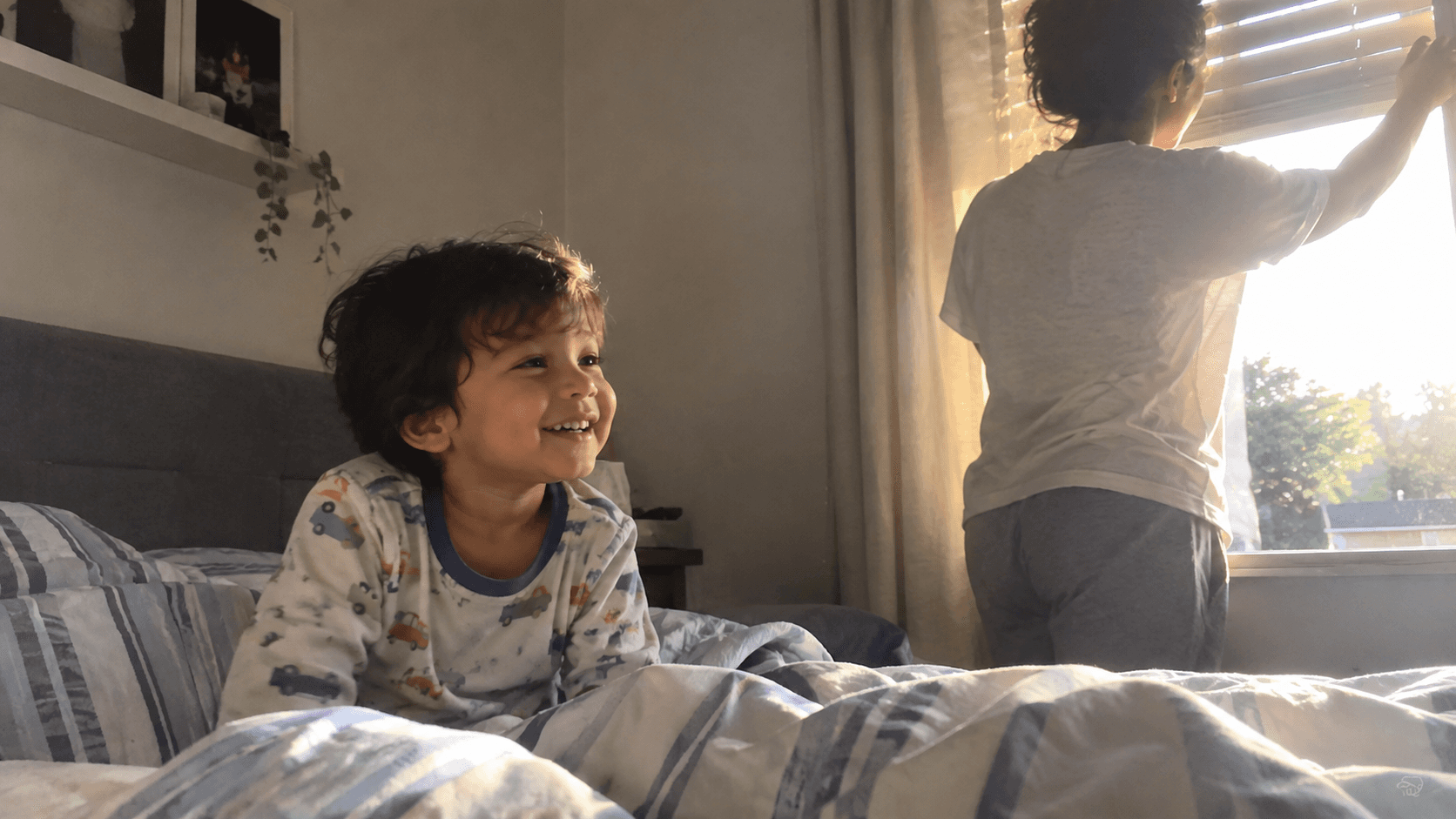
Touch supervision, every time
The AAP recommends staying within arm's reach of young children in or near any water, including bathtubs and small pools. Assign one adult as the dedicated 'water watcher' with no phones or distractions.


Early Learning
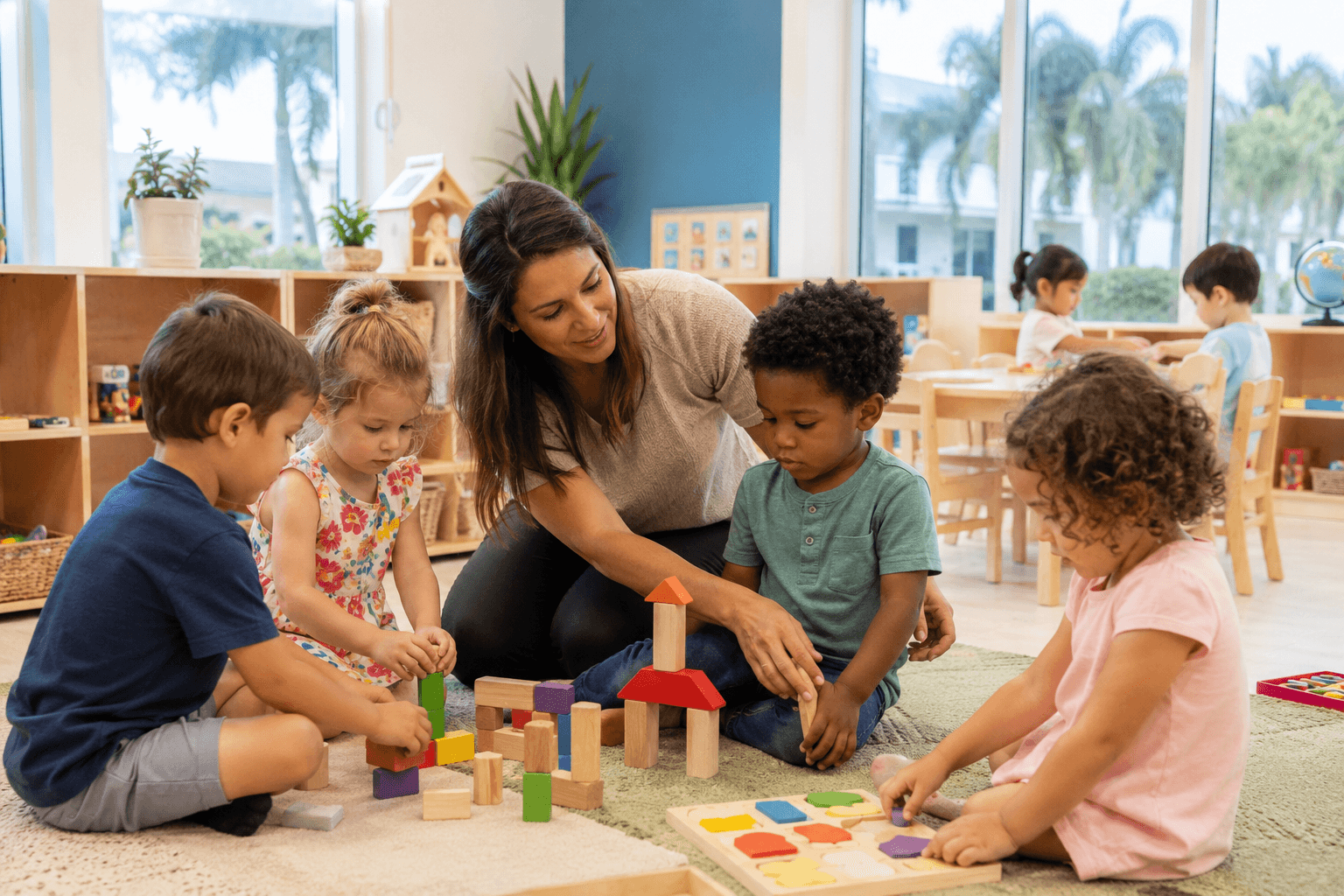
When parents hear the word “play,” they sometimes wonder whether real learning is happening. In high-quality early childhood classrooms, the answer is yes. NAEYC explains that playful learning is not the opposite of education. Instead, it is a way children learn content and skills through active, engaging, meaningful, socially interactive experiences.
One especially important part of this approach is guided play. NAEYC describes guided play as a form of playful learning in which the teacher has a learning goal, prepares the environment, and offers intentional support, while the child still directs the activity. The adult does not take over the play. Instead, the teacher asks questions, offers prompts, and helps the child move toward deeper learning.
When parents hear the word “play,” they sometimes wonder whether real learning is happening. In high-quality early childhood classrooms, the answer is yes. NAEYC explains that playful learning is not the opposite of education. Instead, it is a way children learn content and skills through active, engaging, meaningful, socially interactive experiences.
One especially important part of this approach is guided play. NAEYC describes guided play as a form of playful learning in which the teacher has a learning goal, prepares the environment, and offers intentional support, while the child still directs the activity. The adult does not take over the play. Instead, the teacher asks questions, offers prompts, and helps the child move toward deeper learning.
This matters because preschool children often learn best when they can explore with support rather than sit through rigid, overly scripted instruction. NAEYC notes that guided play can produce stronger learning than free play alone when there is a clear pedagogical goal, and research cited in that article links guided play to gains in vocabulary, spatial learning, literacy, and math.
Guided play supports more than academics. It also helps children build confidence, persistence, communication, and social understanding. NAEYC explains that playful learning supports development across domains and that teachers can use it to strengthen both content learning and social goals such as taking turns, resolving conflicts, and staying engaged with others.
This matters because preschool children often learn best when they can explore with support rather than sit through rigid, overly scripted instruction. NAEYC notes that guided play can produce stronger learning than free play alone when there is a clear pedagogical goal, and research cited in that article links guided play to gains in vocabulary, spatial learning, literacy, and math.
Guided play supports more than academics. It also helps children build confidence, persistence, communication, and social understanding. NAEYC explains that playful learning supports development across domains and that teachers can use it to strengthen both content learning and social goals such as taking turns, resolving conflicts, and staying engaged with others.
This matters because preschool children often learn best when they can explore with support rather than sit through rigid, overly scripted instruction. NAEYC notes that guided play can produce stronger learning than free play alone when there is a clear pedagogical goal, and research cited in that article links guided play to gains in vocabulary, spatial learning, literacy, and math.
Guided play supports more than academics. It also helps children build confidence, persistence, communication, and social understanding. NAEYC explains that playful learning supports development across domains and that teachers can use it to strengthen both content learning and social goals such as taking turns, resolving conflicts, and staying engaged with others.
Each layer covers a different kind of risk, and together they create a much stronger safety net than any one step alone. A locked gate doesn't remove the need for supervision, and swim lessons don't remove the need for a life jacket on a boat.
The AAP recommends staying within arm's reach of young children in or near any water, including bathtubs and small pools. Assign one adult as the dedicated 'water watcher' with no phones or distractions.
Four-sided pool fencing with a self-latching gate can prevent more than half of all swimming pool drownings among young children by removing unsupervised access during non-swim times.
Formal swim lessons can begin after a child's first birthday. Skills alone don't prevent drowning, but they add an important layer alongside supervision and barriers.
Coast Guard-approved life jackets are far more reliable than inflatable arm floaties or toys, especially around boats, lakes, and open water where conditions change quickly.
Keeping a phone poolside and having at least one caregiver trained in CPR can make a critical difference in the rare moments when the other layers aren't enough.
In preschool, children learn best when they can explore actively while teachers provide just enough support to deepen the experience.
Each layer covers a different kind of risk, and together they create a much stronger safety net than any one step alone. A locked gate doesn't remove the need for supervision, and swim lessons don't remove the need for a life jacket on a boat.
The AAP recommends staying within arm's reach of young children in or near any water, including bathtubs and small pools. Assign one adult as the dedicated 'water watcher' with no phones or distractions.
Four-sided pool fencing with a self-latching gate can prevent more than half of all swimming pool drownings among young children by removing unsupervised access during non-swim times.
Formal swim lessons can begin after a child's first birthday. Skills alone don't prevent drowning, but they add an important layer alongside supervision and barriers.
Coast Guard-approved life jackets are far more reliable than inflatable arm floaties or toys, especially around boats, lakes, and open water where conditions change quickly.
Keeping a phone poolside and having at least one caregiver trained in CPR can make a critical difference in the rare moments when the other layers aren't enough.
Teachers can guide children toward vocabulary, math, literacy, or spatial learning while still letting them explore actively and make discoveries.
Questions, storytelling, pretend play, and rich conversation help children practice listening, speaking, and expressing ideas more clearly.
Children build confidence when adults do not solve everything for them but stay close with encouragement and gentle support.
Guided play gives children chances to take turns, negotiate, solve small problems, and work together in meaningful ways.
When parents hear the word “play,” they sometimes wonder whether real learning is happening. In high-quality early childhood classrooms, the answer is yes. NAEYC explains that playful learning is not the opposite of education. Instead, it is a way children learn content and skills through active, engaging, meaningful, socially interactive experiences.
One especially important part of this approach is guided play. NAEYC describes guided play as a form of playful learning in which the teacher has a learning goal, prepares the environment, and offers intentional support, while the child still directs the activity. The adult does not take over the play. Instead, the teacher asks questions, offers prompts, and helps the child move toward deeper learning.
This approach also fits what many families want from preschool: joyful learning with purpose. In LEAO’s existing problem-solving content, preschool learning is already framed around children figuring things out through building, pretending, sorting, creating, and testing ideas with calm adult support. A guided-play blog complements that topic without repeating it because the focus here is the instructional method itself.
Parents sometimes ask whether guided play is just another name for free play. It is not exactly the same. Free play is child-initiated and child-directed without a specific teacher-led learning goal, while guided play keeps child agency but adds intentional adult support aimed at helping children discover something meaningful. NAEYC presents play on a spectrum that includes free play, guided play, and games, with different levels of adult involvement and learning goals.
Parents may also wonder whether guided play is too unstructured to prepare children for school. NAEYC argues the opposite: guided play can help children reach curricular goals while staying developmentally appropriate, joyful, and engaging. The article also notes that teachers are not passive in guided play—they design the environment carefully and match support to the needs of the children in front of them.
This approach also fits what many families want from preschool: joyful learning with purpose. In LEAO’s existing problem-solving content, preschool learning is already framed around children figuring things out through building, pretending, sorting, creating, and testing ideas with calm adult support. A guided-play blog complements that topic without repeating it because the focus here is the instructional method itself.
Parents sometimes ask whether guided play is just another name for free play. It is not exactly the same. Free play is child-initiated and child-directed without a specific teacher-led learning goal, while guided play keeps child agency but adds intentional adult support aimed at helping children discover something meaningful. NAEYC presents play on a spectrum that includes free play, guided play, and games, with different levels of adult involvement and learning goals.
Parents may also wonder whether guided play is too unstructured to prepare children for school. NAEYC argues the opposite: guided play can help children reach curricular goals while staying developmentally appropriate, joyful, and engaging. The article also notes that teachers are not passive in guided play—they design the environment carefully and match support to the needs of the children in front of them.
This approach also fits what many families want from preschool: joyful learning with purpose. In LEAO’s existing problem-solving content, preschool learning is already framed around children figuring things out through building, pretending, sorting, creating, and testing ideas with calm adult support. A guided-play blog complements that topic without repeating it because the focus here is the instructional method itself.
Parents sometimes ask whether guided play is just another name for free play. It is not exactly the same. Free play is child-initiated and child-directed without a specific teacher-led learning goal, while guided play keeps child agency but adds intentional adult support aimed at helping children discover something meaningful. NAEYC presents play on a spectrum that includes free play, guided play, and games, with different levels of adult involvement and learning goals.
Parents may also wonder whether guided play is too unstructured to prepare children for school. NAEYC argues the opposite: guided play can help children reach curricular goals while staying developmentally appropriate, joyful, and engaging. The article also notes that teachers are not passive in guided play—they design the environment carefully and match support to the needs of the children in front of them.
Guided play is a playful learning approach where children stay active and involved, while teachers prepare the environment and offer gentle prompts, questions, or materials to support a learning goal.
When families visit a preschool, it can help to notice whether teachers are simply supervising play or intentionally enriching it. Questions, prompts, materials, routines, and warm interaction often reveal whether a classroom is using play in a purposeful way.
A strong preschool program should make room for curiosity, joy, and meaningful teacher support. At Little Einsteins Academy of Tampa, families can explore classrooms designed to help children build confidence, independence, and school-readiness skills through caring relationships and age-appropriate early learning experiences.
When families visit a preschool, it can help to notice whether teachers are simply supervising play or intentionally enriching it. Questions, prompts, materials, routines, and warm interaction often reveal whether a classroom is using play in a purposeful way.
A strong preschool program should make room for curiosity, joy, and meaningful teacher support. At Little Einsteins Academy of Tampa, families can explore classrooms designed to help children build confidence, independence, and school-readiness skills through caring relationships and age-appropriate early learning experiences.
When families visit a preschool, it can help to notice whether teachers are simply supervising play or intentionally enriching it. Questions, prompts, materials, routines, and warm interaction often reveal whether a classroom is using play in a purposeful way.
A strong preschool program should make room for curiosity, joy, and meaningful teacher support. At Little Einsteins Academy of Tampa, families can explore classrooms designed to help children build confidence, independence, and school-readiness skills through caring relationships and age-appropriate early learning experiences.
At Little Einsteins Academy of Tampa, children learn through caring relationships, hands-on exploration, and age-appropriate classroom experiences that support confidence, independence, and school readiness.
Explore our programs, meet our teachers, and see how LEAO helps children learn through purposeful play, warm support, and meaningful early childhood experiences.
Disclaimer: This content is for general educational purposes only and is not medical, developmental, or legal advice. Children develop at different rates. If you have concerns about your child’s development, behavior, or learning, speak with your pediatrician or a qualified specialist. Little Einsteins Academy of Tampa operates under Florida DCF licensing requirements.
Categories
Recent post